Q: What is best practice now?
A: Printed magazines occupy a unique place in today’s multi-media world – delivering a level of credibility, creativity, longevity and engagement that is hard to replicate online.
Whilst publishing a magazine is going to be shaped by budget, purpose and target audience, achieving best practice in magazine printing essentially comes down to remembering the fundamentals – Printing and Publishing 101. Selecting the right materials, finishes and production techniques to ensure the finished product accurately reflects the brand whilst preparing print files to the highest standard should ensure expectations are fully met.
Q: How do you see it changing in the future?
A: The demise of print has been much exaggerated. Not only is it still with us but it is strongly thriving.
Advancements in print production technology will continue to create exciting and probably hitherto undreamt-of opportunities for both printers and publishers, pushing magazine printing forward with a focus on creating premium publications.
The rapid evolution of AI is astonishing and the way it has become a “go-to” in so many areas is, at the same time, both frightening and incredible.
Already part of the creative workflow, designing for print with AI-generated content and images can present new problems however, particularly with reference to fonts, image resolution and quality so it’s worth bearing in mind that whilst it is an invaluable tool, it does not (yet!) replace the critical human element essential to the uniqueness of a printed magazine.
In an age of fleeting digital content where we’re not always sure what’s real and what’s fake, printed magazines offer their audiences something increasingly valuable: tangibility, credibility and permanence – and will continue to do so, reinforcing a brand in a way no other medium can achieve.
Q: What are your three top tips?
1. Design for print! It seems obvious but as content is increasingly created for online and offline channels, the line between preparing it for the medium in which it is going to be used – and what it is actually used for – can become blurred.
Print files should be created in CMYK – not RGB – and images to be used converted from RGB to CMYK.
The available spectrum of colours on screen is greater than that which can be reproduced in CMYK, so whilst files in RGB will still print, they will be converted to CMYK by the printer’s file conversion software. This can result in dull images and potentially unwanted – and sometimes quite dramatic! – shifts in colour.
Unlike designing for screens, print requires bleed, typically 3mm, so nothing inadvertently gets trimmed off at the edges. Likewise, text should be within a safe margin so it isn’t too close to the trimmed edge or, in the case of bound publications, too close to the centre at risk of being lost in the formation of the spine.
Image resolution is super important. Files should be supplied at 300dpi – a sufficient dot density to keep images sharp and text crisp.
If an image looks blurred and fuzzy on screen; it will appear even more so in print!
2. Work with your printer. Your printer wants to deliver the best possible printed magazine so starting the conversation early – particularly during the planning stages – ensures both parties know what’s required and are fully invested in the success of the project.
With a wealth of knowledge and experience at their disposal, your printer will not only share your enthusiasm for your magazine but will be more than happy to provide samples and make recommendations so you get the best from your print.
This includes advice relating to the finished size; optimal pagination for cost efficiency; available paper types and weights; cover treatments and finishing options but they will also be able to highlight potential cost savings, for example with mailing, switching to Mailmark and paper wrapping or looking at different downstream providers.
Although printers might operate similar presses, file upload systems and preparation requirements vary.
Ask your printer for their specific production specifications to ensure the correct colour profile; export settings; spine width and PDF guidelines to ensure files are supplied correctly, ensuring production runs smoothly and you achieve the best possible printed publication.
3. Be sustainable. Sustainability is already high on the agenda for both printers and publishers. Choosing to work with a like-minded print supplier reflects a publisher’s own environmental goals and aligns with the expectations of their readers and advertisers.
Many printers offer responsibly sourced FSC or PEFC papers as standard along with carbon balancing and paper wrapping for subscriber copies. Printing with soy or vegetable-based inks delivers bright colours and crisp results without compromising quality.
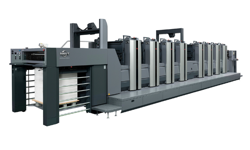
The installation of energy efficient print production equipment helps to reduce overall waste and consumption of electricity and water so seek out those printers who have the latest kit as the production efficiencies delivered by the latest technology can also translate into cost savings for the customer.

About Buxton Press
Buxton Press is an award-winning commercial litho printer. Printing in excess of 55 million magazines, brochures and catalogues per year and responsible for more than 450 regular titles, we are an independently owned, modern printing company based in the heart of the UK and pride ourselves on providing a unique solution for each of our publishing clients.
Website: www.buxtonpress.com
Email: lindsayfrost@buxtonpress.com
Tel: 01298 21 2016
This article was first published in Issue # 1 of Best Practice in Publishing, a new publication from InPublishing. Click here for links to the other ‘best practice’ articles from the publication.