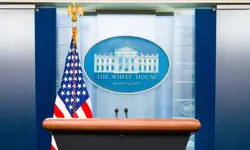
The White House is waging war on the press.
President Trump’s press secretary, Karoline Leavitt, has described the BBC as “100% fake news” and a “propaganda machine”.
You don’t need to be a fan of the BBC to know that that’s absurd.
Since returning to power, Trump has engaged in widespread lawfare against mainstream media, bringing lawsuits for eye-watering sums against the New York Times, Wall Street Journal, ABC, CBS and the Des Moines Register. Most serious commentators see virtually no merit in any of the cases.
He also continues to loudly disparage respectable news media as the “enemy of the people” who peddle “fake news”, to be rude and abusive to reporters who ask him questions he doesn’t like, and to restrict access to press briefings for news outlets that displease him.
Now, the BBC is in his sights. I hope they push back robustly.
Yes, the offending edit was a bad mistake and one wonders why it was done in the first place and why it wasn’t spotted before the programme was broadcast.
The BBC has handled the situation poorly. Once the problem had come to light, they should have got on the front foot and taken action, not waited for the response to be dragged out of them.
But, they should still fight any upcoming lawsuit on the basis that:
- over a year has passed since the original broadcast.
- the edit in question was part of a wider programme, in which pro-Trump voices were heard, so “malice” will be hard for Trump to prove.
- Trump’s claim to have suffered reputational damage is very open to question. A poll carried out in June 2022, long before the Panorama programme was aired, found that nearly 6 in 10 Americans believed that Trump should be charged with a crime for his role in the attack on the US Capitol.
- it is questionable how many people in Florida, where the case has been bought, will have seen the programme.
- it is highly unlikely that the edit had any material impact. After all, Trump won the election. Also, the insignificance of the edit in the wider scheme of things is evident by the fact that Trump appears to have been completely unaware of it until the Telegraph broke the story last week.
Certainly, the BBC should acknowledge the error, re-edit the programme, tighten its processes and apologise. But nothing more than that. A free press can’t survive in a climate of fear where the rich and powerful can browbeat it into submission.
You can catch James Evelegh’s regular column in the InPubWeekly newsletter, which you can register to receive here.