Reporters Without Borders (RSF) at the end of April released its 25th World Press Freedom Index at a time when political pressure on the press is intensifying, authoritarian tendencies are growing and the media market is heavily weakened. This year, the Index’s analysis highlights a deterioration in the conditions for journalism in many parts of the world, despite some isolated improvements, as 100 out of 180 countries and territories have seen their press freedom score decline. Here is a look at the 2026 analysis, region by region, as reported by RSF.
Europe – Central Asia
Despite the entry into force of the European Media Freedom Act (EMFA), several European Union member states are still in breach of the legislation. While EU countries have generally retained their leading positions in the Index, the overall picture remains mixed. Estonia, for example, has slipped from 2nd to 3rd place due to political pressure on the press.
Eastern Europe and Central Asia remain marked by highly restrictive regimes, such as Belarus (165th, down -1 place), Azerbaijan (171st, -4), Russia(172nd, +1) and Turkmenistan (173rd, +1), which hold some of the lowest scores in the world for the legal indicator (between 22 and 32 out of 100). By contrast, Ukraine (55th, +7) has shown a slight improvement despite the ongoing war.
The Americas
Under leaders such as Donald Trump, Javier Milei and Nayib Bukele, journalism is increasingly being criminalised and exposed to violence across the region. The United States (64th, -7) is slipping due to growing political pressure, while Argentina (98th, -11) is seeing multiplying lawsuits against the press. In El Salvador (143rd, -8), the 2025 foreign agents law is intensifying the crackdown on the press and forcing many journalists into exile.
Asia-Pacific
In the Asia-Pacific region, press freedom in the majority of countries is classified as being in a “difficult” or “very serious” state. Authoritarian regimes frequently weaponise the law, impose censorship and promote propaganda to repress the media. China (still ranked 178th) exemplifies this trend, with the highest number of detained journalists in the world, as 121 media professionals are currently behind bars.
In the Philippines (114th), terrorism charges stemming from “red-tagging” — a tactic in which journalists investigating issues sensitive to the government are accused of being “subversive” or “terrorists” — have become the authorities’ preferred means of silencing the press. The case of journalist Frenchie Mae Cumpio, who has been behind bars for six years, has become a symbol of this repression.
Sub-Saharan Africa
In Africa, press freedom largely remains in a very deteriorated state. Eritrea(180th) remains at the bottom of the Index — it notably holds the world’s longest-detained journalists without trial, such as Dawit Isaak.
In the Sahel region, the military regimes of Burkina Faso (110th, -5), Mali(121st, -2) and Niger (120th, -37) are severely restricting the press in the name of national security, with Niger recording the steepest fall in the Index, dropping 37 places. In the Great Lakes region, from the Democratic Republic of the Congo (130th) to Burundi (119th) to Rwanda (139th), journalists have been regularly imprisoned for several years now.
Middle East and North Africa
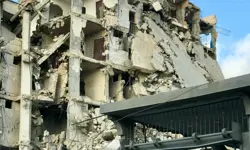
Since 7 October 2023, more than 220 Palestinian journalists have been killed by the Israeli army during the war in Gaza, including at least 70 slain due to their work. This makes the Middle East and North Africa (MENA) the region where the state of press freedom is the most catastrophic according to the 2026 Index, with 18 out of 19 countries classified as “very serious” (11) or “difficult” (7).
However, some countries in the region are seeing positive momentum: Syriahas risen from 177th place in 2025 to 141st in 2026 (+36) — a historic improvement one year after the fall of dictator Bashar al-Assad. While the press freedom situation in the country remains “very serious,” the scores for all five indicators are improving, with a particularly marked improvement in the legal score.
Keep up-to-date with publishing news: sign up here for InPubWeekly, our free weekly e-newsletter.