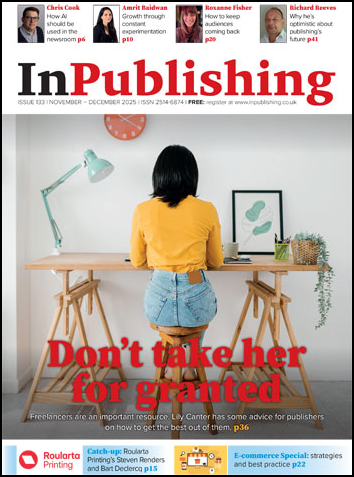
The November / December issue of InPublishing magazine was published in early December. Here are some of my takeaways from it, one from each article:
- AI in the newsroom: AI is making it easier to do cool new stuff even if you only have a few reporters. (H/t Chris Cook)
- Multi-channel publishing: It’s not about where you show up, but how you’re showing up. (H/t Amrit Baidwan)
- Puzzles: The puzzle experience is evolving. What used to be something quiet and solitary is now increasingly dynamic and social. (H/t James Brydon)
- Power of print: Premium print is special. Blue-chip advertisers like Cartier want to be on paper because they can create an atmosphere that is not possible on a screen. (H/t Steven Renders)
- Columnists’ job security: AI doesn’t understand feeling shame. It doesn’t understand feeling scared. It doesn’t understand feeling love for your child. People want to read about someone’s emotions. (H/t Caitlin Moran)
- Bylines: Bylines have become more important for accountability and authority in a media landscape where trust has become so much more of an issue. No byline will mean AI. (H/t Dickon Ross)
- Accentuating the human: What remains defensible for publishers is the truly human stuff – lived experience, original voices and novel ideas. This is the content that will be in increasingly short supply on an AI-saturated internet. (H/t Roxanne Fisher)
- E-commerce top tip: Test small, learn fast, and use print-on-demand to reduce risk. E-commerce rewards agility. Trial designs, seasonal concepts, and collaborative ideas using print-on-demand or short runs. (H/t Nashitha Suren, who took part in our e-commerce special)
- Clickbait: Do clickbait headlines work? In the short term, possibly, in the long term, definitely not. Failure to deliver on a headline’s promise damages your brand. (H/t Peter Sands)
- Kill fees: If the work has been filed, and is to the expected quality, then publishers need to pay. If the piece is killed at a later date, that is on the publisher, not the freelancer. Kill fees are not acceptable. You would not refuse to pay an electrician who connected lights in your garage if you suddenly decided you didn’t want to use them. (H/t Lily Canter)
- Gender imbalance: In many sectors, the gender balance still isn’t right, which is a missed opportunity. Because, when women get to senior positions, it changes (in a good way) how industries think about talent and leadership. (H/t Simone Broadhurst)
- Video: Video possesses a human authenticity that makes it more AI-proof than text. Yes, there are convincing deepfakes and eerily lifelike generated videos, but the draw for video is the content creator or host themselves. (H/t Richard Reeves)
- Importance of the press: When the other three estates fail, when the judiciary and the executive and the legislative branches fail, the fourth estate has to succeed. (H/t George Clooney)
- IT resources: This is the long-term Achilles heel of the media business. Historically, it seemed like progress was being made and there was a real sense of “getting there” at last with tech developments, but this has now stalled. As tech is the key enabler of every change strategy, this weakness remains a massive issue. (H/t Jim Bilton)
If you want to read the full issue, then please register here. Once you’ve completed your registration, you’ll be provided with a link to the digital edition.
(Finally, don’t miss our ‘E-commerce Special - Q&A’ on Tuesday, 27 January. Click here for more information and to register.)
You can catch James Evelegh’s regular column in the InPubWeekly newsletter, which you can register to receive here.