When truth becomes a liability, journalists become targets. And some nations once sworn to protect them are now leading the charge.
From courtroom subpoenas to drone strikes, from digital mobs to legal warfare, the threats are hybrid, relentless, and aimed not just at individual reporters, but at the fundamentals of journalism itself. Unless we overhaul how we protect the press, we may soon be unable to defend it at all.
Last autumn, senior editors and security leads from the world’s top newsrooms gathered behind closed doors to discuss a terrible new threat on the Ukrainian front lines — drones capable of striking with little warning and terrifying precision.
The meeting, organised by the International News Safety Institute (INSI), heard that traditional rules like “run for cover” no longer applied — unless that cover was deep below ground in a bunker. Small, fast and agile, drones could fly through doors and windows. They tailed media convoys and streamed the footage back to their Russian operators in real time.
Drones could be detected, or even defeated, by expensive jammers that scrambled their signal, but the debate was fraught about whether news teams should use them. Some participants worried that interfering with a drone might make journalists look like combatants. Others argued that doing nothing was untenable and defeating them with the latest technology was no different than wearing a flak jacket or riding in an armoured car.
Even amid the disagreement, one thing was clear: action felt possible. Risk, while rising, still seemed manageable with foresight, coordination, and technology tipping the balance toward safety. But the reality on the ground was shifting too fast.
Within a few weeks, in early 2025, the heated discussions felt almost quaint and the suggestions obsolete. Ukrainian battlefields were now dominated by wire-guided drones — tethered to operators via near-invisible fibre-optic cables stretching kilometres. These drones emitted no radio signals. There was nothing to detect. Nothing to jam.
The rise of wire-guided drones wasn’t just a battlefield pivot — it was a blueprint for what is to come. It was a regression in technology rather than a leap forward — low-tech by design, and all the more dangerous for it.
Paradoxically, this is also what appears to be happening with press freedom in the new populist world order. The global assault on journalism isn’t getting more sophisticated. It’s getting more brazen.
From Budapest to Washington, power is reverting to old playbooks: vengeance over vigilance, force over fact. Populist and authoritarian leaders in the ostensibly democratic West are returning to what has always worked in non-democratic countries: threats, lies and abuse of power.
The safeguards news organisations have always relied on — editorial independence, legal protections, institutional credibility — are buckling under the relentless pressure. Risk assessments struggle to keep up with the arbitrary, the capricious and the simply outrageous. Legal firewalls are breached. And the attacks, once episodic, are now becoming systemic.
Trump’s second term: Strategy over spectacle
In his first presidency, Donald Trump’s war on the press looked chaotic: shouted insults, revoked credentials, and relentless cries of “fake news”. But the bluster was part of a larger strategy that culminated in the January 6, 2021, storming of the Capitol building. Trump’s goal was clear — delegitimise democracy and journalism as one of its key pillars.
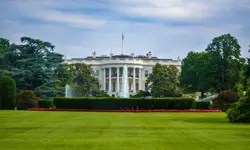
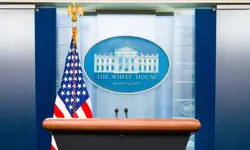
Now in his second term, that campaign has sharpened. The Trump administration has turned executive power into a weapon against journalists. Critical outlets are barred from briefings. Loyalty is rewarded with exclusives. Journalists are tracked, harassed at borders, and placed on government watchlists. Source protection is no longer assumed. The message is unmistakable: dissent will be punished.
Through the INSI network, many of the so-called “legacy” or “mainstream” news organisations had for months been sharing and discussing strategies against an escalation in hostile government tactics against the press. But nobody could have foreseen the speed or precision with which these would be deployed.
Within days of Trump’s inauguration, the press pool system was changed to allow the administration to rotate access — and exert greater control; the Associated Press was barred from the White House and Air Force One; Voice of America was defunded; and legal action or investigations were initiated against ABC, CBS, NBC News, and NPR. Meanwhile, investigative journalists began reporting intensified scrutiny of devices at borders, leading to many journalists starting to scrub social media in advance of travel. Reports on the US government’s use of private firms — like Israeli spyware company Paragon, which targets encrypted apps like Telegram and Signal — raised inevitable questions about when, not if, those tools would be used against journalists.
A judge later decided to reinstate the Associated Press White House access — a modest but meaningful victory for press freedom, though at the time of publication the government was appealing that decision, so AP wasn’t back in the room yet. But such rulings may remain the exception rather than the rule, as populist leaders like Trump increasingly test the limits of democratic guardrails.
As all of this started to happen, traditional accountability mechanisms — lawsuits, peer solidarity, advocacy by press freedom campaigners — dutifully kicked in. But, with democratic leaders the world over looking away, those are unlikely to have an impact on the situation on the ground any time soon.
Trump’s playbook has indeed a powerful appeal. From India to Israel, populist leaders are following his model: vilify the media, starve it of access, then punish it through legal and economic pressure.
In India, Narendra Modi’s government has deployed tax laws and anti-terror legislation against critical reporters. In Israel, local journalists perceived to be critical of Benjamin Netanyahu’s policies have been branded as traitors by senior officials, and the country’s oldest newspaper, Haaretz, has been placed under government sanctions. In each case, silence from democratic allies only emboldens the assault.
Why Gaza matters everywhere
Nowhere is the erosion of protection for journalists more visible — or more violent — than in Gaza.
Since October 2023, more than 170 journalists and media workers have been killed by Israeli forces, according to the Committee to Protect Journalists — many while simply living at home with their families. Most of them were Palestinian and worked for local outlets, rather than big global media companies. The sheer scale of these deaths sends a message: that being a journalist is a punishable act. When journalists are killed in such numbers, and when those deaths are disputed or dismissed, the profession is treated not as a protected pillar of democracy, but as collateral — or even as a target. Again, the response from Western governments has largely been silence, deflection and, in some cases, even tacit approval.
Independent investigations — including those by Reporters Without Borders and Human Rights Watch — have found evidence suggesting repeated, targeted strikes by Israel. Yet no red lines have been drawn by any Western government. No public accountability demanded. If the world accepts the idea that journalists can be targeted in Gaza with no accountability, if it becomes normal to dispute who is a journalist based on their politics or ethnicity or employer, then this is destined to become the new standard for other conflicts.
Protection by exception
The principle that journalists are protected civilians under international law is fraying — not through repeal of legislation, but through an accumulation of exceptions. One death excused as collateral. One surveillance order justified by national security. One lawsuit filed not to win, but to drain a newsroom dry.
The connection between populism, authoritarianism and censorship of the news media couldn’t be clearer and, to varying degrees, it increasingly affects Europe. In Hungary, the public broadcaster functions as the state’s mouthpiece. The main channel, M1, was found to blacklist opposition figures or feature them only in negative contexts, while broadcasting uncritical, glowing portrayals of government policies. During the 2022 election campaign, opposition candidates received less than five minutes of total airtime on public television, compared to hours of coverage for Viktor Orbán.
In August 2024, two British photojournalists were arrested while covering demonstrations, raising significant concerns about press freedom and police conduct. One, a veteran photojournalist, said he was standing on a public footpath when he was arrested, as he was covering an ecological protest. He was released on bail and was not charged, but police retained £14,000 worth of his camera equipment.
A second journalist was arrested prior to a pro-Palestinian demonstration — before the protest had even started. This pre-emptive detention raised alarms about the potential targeting of journalists based on anticipated coverage rather than any unlawful conduct.
These incidents occurred despite previous reprimands to the police for similar unlawful arrests of journalists covering protests in 2022.
Meanwhile, national security laws designed to counter espionage are being bent to criminalise public interest reporting in many countries.
In Northern Ireland, for example, police recently admitted to surveilling 300 journalists and 500 lawyers for years under anti-terror powers. Their names, contacts, and sources were swept up in a dragnet meant for spies.
The online frontline has also moved with unsettling speed.
Far-right media ecosystems and populist influencers have normalised attacks on journalists. This includes digital mobs, doxxing, and “gotcha” entrapments where snippets of interviews are cut and weaponised. These moments often go viral, detaching from truth and context. Reporters attending public events may now need training to prepare for such incidents.
Online mobs assemble quickly, moving across platforms — from X to Telegram to WhatsApp — spreading threats and conspiracies. The target is rarely just the journalist’s argument. It’s their identity, their family, their safety.
Under Elon Musk, X has deprioritised content moderation and reinstated accounts previously banned for coordinated abuse. Meta has promptly followed suit. News organisations told INSI that abuse and threats against journalists are frequently ruled “not in violation” of the platform’s terms. But this normalisation has real consequences. Several journalists now avoid using their full names, deactivate direct messaging, or quit the platform altogether. Those who stay often work under digital siege.
Even internal newsroom systems are vulnerable. Breached email servers can reveal sensitive information — about investigations, interviewees, and whistleblowers. Safety-savvy media organisations no longer treat cybersecurity as a technical issue, but rather as a core editorial concern central to the survival of independent journalism.
The cost of waiting
“I live with the fact that we didn’t struggle enough,” recently said Mikhail Rubin, an exiled Russian journalist, reflecting on the early days of disappearing press access in Russia. Speaking to the Freedom of the Press Foundation, he described how many in the media waited for a dramatic tipping point before pushing back.
“In Russia, we were all waiting for the worst thing to happen before we resisted,” he said. “But there is no terrible barrier. By the time you recognise something as ‘terrible,’ you’ve already lost the ability to resist.”
At INSI, we believe it’s time to heed the warnings and move beyond reactive fixes. Alongside our member organisations, we operate on the assumption that resilience can no longer mean simply enduring. A truly resilient media environment isn’t sustained by strong journalism alone — it depends on the systems that protect those who produce it.
Newsrooms need permanent, cross-border security alliances. Legal, digital, and psychological support must be timely and shared. Risk should be pooled; protection, collective. When one journalist is targeted, the response should come from many.
Digital safety must be second nature — from intern to editor — and so should source protection protocols. When a journalist steps back from a story or platform for safety reasons, they must be supported.
Legal teams need to collaborate internationally, equipped with anti-slapp (strategic lawsuits against public participation) defence funds, litigation guides, and travel risk protocols for exposed journalists. Border searches, encrypted devices, source confidentiality — these should follow agreed operating procedures. Lawyers should be present in editorial planning meetings, not only called in during a crisis.
Mental health support must be built into newsroom planning. Journalists shouldn’t need to request help. Editors must be trained to recognise trauma, and staff must trust that support will be swift, confidential, and genuine.
Most importantly, governments that claim to support press freedom must demonstrate it. That means speaking out when journalists are killed — regardless of who pulled the trigger. It means defending media rights at home and abroad with consistency, not selectivity.
Future-proofing journalism
Journalism training must also adapt to today’s realities. It is no longer sufficient to teach verification and ethics without digital hygiene, metadata awareness, secure communication, and strategies for dealing with online abuse.
Students must know how to conduct interviews safely, navigate repressive legal environments, and protect sources in high-risk situations — long before they set foot in a newsroom.
Funders must evolve as well. Foundations that support press freedom need to shift focus from storytelling alone to structural safety. That includes funding cybersecurity upgrades, emergency relocation schemes, legal defence, and trauma care. Capacity-building is vital — but irrelevant if journalists are not safe enough to put it into practice.
Courage alone is no longer enough. Journalism needs backing — from governments, institutions and, crucially, the public. A free press does not exist for its own sake. It exists for everyone who relies on facts to make decisions, challenge power, and imagine alternatives.
If doctors or lawyers were systematically targeted, there would be national outrage. Yet the backlash is muted when journalists are harassed or killed — because journalism often speaks uncomfortable truths.
News does not emerge from a vacuum. It is created — frequently under pressure, often under threat.
The public must be re-educated to value journalism not as free content, but as a civic service.
The cost of inaction is immense. If our ability to bear witness collapses, so does truth. And in its place comes something worse than silence: propaganda.
This is no longer a battle for access or credibility. It is a fight for survival.
Adapt — or disappear.
References
- Reporters Without Borders (RSF). (2024). Hungary’s “Sovereignty Law”: Viktor Orbán’s new dangerous provocation targeting independent media.
- Committee to Protect Journalists (CPJ). (2024). Journalist deaths in Gaza since October 2023.
- Human Rights Watch (HRW). (2024). Investigations into targeted strikes on journalists in Gaza.
- The Guardian. (2022, April 2). Hungary’s state media accused of blacklisting opposition figures.
- Index on Censorship. (2024). British photojournalist arrested at protest loses £14,000 of equipment.
- US Press Freedom Tracker. (2024). Pre-emptive detention of UK journalist before protest.
- Associated Press (AP). (2024). How Hungary’s Orbán uses control of the media to escape scrutiny.
- Freedom of the Press Foundation. (2024). Interview with Mikhail Rubin on Russia’s crackdown on press freedom.
- RSF. (2025). Trump’s attacks on government transparency erode press freedom.
- The New Yorker (2024). The Technology the Trump Administration Could Use to Hack Your Phone
- Reuters Institute (2024). The worst threats to journalism come from politicians. The best defence against them is serving the public.

This article is a chapter from the new book, ‘Pandering to populism? Journalism and politics in a post-truth age’, edited by John Mair, Tor Clark, Neil Fowler, Raymond Snoddy and Richard Tait, published by Bite-Sized Books. Available on Amazon.