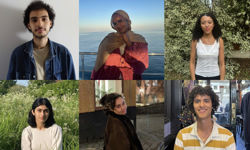
By any reckoning, Ezekiel Bertrand is quite a remarkable young man.
He began his apprenticeship in journalism aged just 16, passed all his shorthand exams up to 120 words per minute on his first attempt and is currently the youngest employee at Newsquest London, at age 18.
Bertrand joined the South London team after completing the Young Reporters Scheme whilst doing his GCSEs and started four days after getting his exam results at age 16.
Oh, and he is also the published author of the novel WARNING.
We are at Hallé St Peter’s in Manchester, a converted church that is the northern home of the eponymous orchestra, to worship at the altar of all things good in journalism otherwise known at the NCTJ Awards for Excellence.
Bertrand, the youngest person in the room, walked off with the apprentice of the year award having arrived on the podium resplendent in full black tie, fully reflecting the invite instructions to “dress to impress”.
It was one of 22 awards handed out to students and trainees by Alex Crawford, special correspondent at Sky News and patron of the NCTJ.
She said: “I’m truly inspired by the talent, dedication and passion we’ve seen here today. These students, trainees and apprentices represent the future of journalism, and if today’s shortlisted entrants are anything to go by, journalism is in very safe hands.”
Bertrand is hoping his safe hands will lead to a career in TV. “My ultimate dream is to be a news anchor on ITV,” he said. “Although I do see myself working my way up through editorial roles first. I want to continue honing my journalistic skills, taking on leadership responsibilities, and eventually becoming an editor.
His boss, Immy Share, digital editor of all 23 of Newsquest’s London titles, could not have been prouder. “Working with Ezzy and being his manager is the biggest honour. He is brilliant, enthusiastic and deserves every success,” she wrote. “Not to mention last week he became the youngest person ever to have passed his 120wpm (!!!) shorthand exam first time.”

Shaheena Uddin, 23, founder of Muslim Journalists Connect, won the individual equality, diversity and inclusion award for her work supporting Muslim media professionals through mentorship, networking and advocacy. Uddin completed the NCTJ diploma at News Associates London with a bursary from the Journalism Diversity Fund.
And she’s not finished yet. “Listen and include diverse voices who are underrepresented and underreported on, so that the stories we tell are proportionate to the communities who read them,” she said.
“Also learn how to effectively use AI for fact-checking and dispelling misinformation without letting it take over the crucial human thinking and work that journalists are trained to do.”
This year’s NCTJ trainee of the year is Hayley Clarke, an education reporter at BBC News and NCTJ ambassador. Hayley, 32, who was shortlisted in four categories at the awards, achieved the best overall results in the NQJ out of all the candidates sitting in 2023-24. Hayley completed the NQJ as a senior apprentice, and achieved a distinction in all three assessments.
Her assessment of where things are going: “Invest in social media teams. That’s where everyone is going for their news!”
Imogen Garfinkel from PA Media Academy was named student of the year, having achieved the best overall diploma results with an impressive seven As. Imogen now works as a news reporter at the Jewish Chronicle and hopes to become a cultural features writer in the future.
Joanne Forbes, chief executive of the NCTJ, congratulated the winners, stating: “These awards showcase the best of emerging journalistic talent. It is inspiring to see how these journalists are upholding the highest standards to tell important stories across a variety of different platforms.
“We received a record number of entries this year and the judges praised the exceptional standard of work, so everyone who made the shortlist should be tremendously proud of this achievement.”
A full list of the award winners can be found here.
The thoughts of Ezekiel Bertrand, award-winning journalist, aged 18, on...
• Dealing with criticism: “I know the road ahead won’t always be smooth. One of the biggest challenges I’ll face is dealing with criticism — both from colleagues and the public. Over the last two years, I’ve managed to develop thick skin and keep improving, but it can always be tricky hearing feedback that challenges your work.”
• The emotional toll: “Another challenge will be the emotional toll of covering tough stories. It’s not always easy to stay objective when reporting on difficult or sensitive subjects, and it can be draining at times.”
• Writing a novel: “I actually began writing my novel WARNING (although it had many working titles over the years) when I was 13, back in 2020. At first, it was set in Victorian times, but as we came out of the pandemic, I decided to shift it to a COVID-era setting that readers could relate to. It took around three years to write, and — funnily enough — I finished it just weeks before getting properly stuck into journalism.
“I wasn’t inspired by a painting or a tree or anything like that. Weirdly, the idea came from playing Roblox! My friends and I used to take on different personas while playing, and I thought, “I’m going to turn this into a full story.” A few re-edits, backspaces, and laptop-slammings later, WARNING was complete and published.
“I’ve started writing other books since then, but it’s exhausting trying to balance articles, stories, and NCTJ coursework all at once. Right now, I’m working on a psychological thriller called My Dead Brother’s Wife, which I’m really enjoying.”
• Mastering shorthand: “The usual advice to practise daily definitely helps. But one thing that really boosted my speed was writing out songs I knew off by heart in shorthand. It forces you to think fast, reinforces outlines you’re shaky on, and makes it feel less like revision.
“Eventually, I got to the point where I could write the lyrics in real time while listening to the song. Also, when watching TV or listening to someone talk, I’d visualise the outlines in my head — or (as I can’t stop doing now) pretend my finger’s a pen and “write” them on the table or under the desk.”

Young voices
“I see too many reporters in their bedrooms in t-shirts!”
No, not the view of Mr Crusty, the editor who hankers after the good ole days of a full newsroom and clattering typewriters, but Emma Dodd, 25, commended in the news journalism category and now a reporter on the Henley Standard after studying at Darlington College.
Dodd is not done there, going on to say that news brands need to work at building a solid trustworthy format in Reels and TikTok. “Bite sized news packets that don’t lower its tone or lower itself to following trends. Be formal on TikTok,” she said.
The awards room was buzzing with anticipation as young people who had studied at university or college were reunited over mini mozzarellas with ciabatta croutons, often with the course team in attendance like proud parents at graduation.
Many were keen to share their views on how journalism should be shaping up as their careers are taking off.
Tom Burgess, 24, a BBC reporter who was commended in top scoop, had his shopping list: “Trust, transparency, investigations, engage with community, quality reporting, NO clickbait.”
Conor Wilson, 33, Daily Express defence reporter and highly commended in top scoop is looking forward: “Identify and embrace the way in which news will be consumed in the 2030s.”
Bearing out the truism that everyone comes from somewhere no matter where they end up, there was much support for ‘local journalism’.
“Voice the issues that truly matter to people,” said Isabelle Parkin, 23, reporter at the Express & Star in Wolverhampton.
Ben Gardner, 24, a Newsquest reporter had this angle: “A great commitment to long-term coverage in the local press, with less focus on performance of individual stories.”
Phoebe Abruzzese, 24, LBC reporter and finalist in apprentice of the year, put it bluntly: “Remember that the regions exist.” And Max Kendix, 23, political reporter at The Times was also succinct: “Invest in local news”.
Not surprisingly, there was a good appetite for Flavour of the Month / Year / Decade / Lifetime, artificial intelligence, which came in for plenty of robust comment.
“Strictly regulate the use of AI because at the moment, a lot of it is negative and unethical,” said Ben Coneybeare, 23, anti-corruption investigator.
Broadcast journalist Poppy Lindsey, 23, was keen to take advantage of AI: “Make sure AI is moderated so it can accelerate journalistic talent. Take a chance on people willing to learn. Make active room for those with differences.”

Backed up by Holly Nichols, 23, winner of student podcast, who said: “Use AI as a resource not a substitute!” And freelance David Olaseinde, 23, said: “Learn how to optimise AI because all industries are having to adapt to it.”
The NCTJ diploma seems to give a good grounding in philosophy. Hayden Barrett, junior character animator, 23, wanted: “Freedom of expression and speech without any predetermined narrative. Having chance to hear all sides of stories without any bias.”
Jay Blakeway, a radio producer, 22, said: “Ensure a future for the next generation with equal opportunities.” And Rosabel Crean, 28, commended in student podcast, implored: “Improve audience / reader trust and credibility in reporting.”
This article was first published in InPublishing magazine. If you would like to be added to the free mailing list to receive the magazine, please register here.