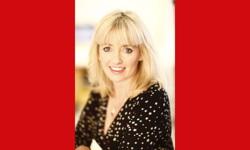
You can gain a number of important insights into the remarkable career of investigative journalist Carole Cadwalladr, who uncovered the Cambridge Analytica scandal, in three recent tweets.
The first is almost lengthy by the normal standards of Twitter, now called X.
It read: “Polite reminder. Trump and Brexit are not 2 different things. They are the same thing. Same companies, same data. Same Facebook. Same Russians. Same Cambridge Analytica. Same Robert Mercer. Same Steve Bannon. Same Breitbart. Same Alexander Nix. Same Donald Trump. Same Nigel Farage.”
The tweet has now been getting a lot of attention but isn’t it all increasingly familiar territory?
The explanation came in Cadwalladr’s second tweet.
“This 2018 tweet has been going constantly viral for the past week. It’s almost as if people have suddenly realised there is some sort of connection,” noted Cadwalladr with more than a trace of understatement.
After all, she has been warning in her reporting for The Observer and The Guardian since at least 2016 that technology was disrupting all before it and that democracy itself had been firmly in its sights.
Cadwalladr has been prescient but above all right in exposing the threats technology can pose to all our institutions.
The third tweet came in response to the second and was from David Yelland, former editor of The Sun.
“The day Carole Cadwalladr is employed again at a senior level by a major media organisation we shall know that the sole person who saw what was happening early has been given the platform she deserves. But who is brave enough?” Yelland asked.
He was referring to the strange fate that has befallen Cadwalladr in recent weeks.
After twenty years on The Observer on freelance contracts — an employee in all but name — she was the only one out of twenty such freelances not to be offered a new contract when the Guardian Media Group sold The Observer to James Harding’s Tortoise Media.
Cadwalladr, says that after being initially open-minded about the deal, she later spoke out against it.
Just starting to dawn...
As for the sudden springing back to life of a tweet from 2018, Cadwalladr finds it “really weird” that it’s only now that people are starting to realise that her warnings have been all too real, given that she has been shouting very loudly about the links between Brexit and Trump and Russia for years.
Along the way, she has suffered horrendous online abuse, much of it gender-related and designed to disparage her, and focussing on the fact that she is single and childless rather than on her journalism.
In 2018, political commentator Andrew Neil, then at the BBC, referred to her in a tweet as “a mad cat woman from Simpsons, Karol Kodswallop”
The BBC press office called her to say that Andrew had deleted what he recognised was an “inappropriate” tweet.
Cadwalladr says she replied it wasn’t ‘inappropriate’, it was misogynistic.
The award-winning journalist says she has not had an apology from Neil to this day.
Ironically, in March, Neil wrote a spectacular mea culpa in the Daily Mail admitting that he had been wrong to give President Trump the benefit of the doubt and that it was now clear that Trump actually was an “unprincipled, narcissistic charlatan”.
On the larger picture, does Cadwalladr feel vindicated?
“No, I wouldn’t say so. I would only feel vindicated if the UK Government sets out to protect our elections and politics from foreign interference and it actually led to the sort of investigation I have been seeking since 2018,” she says.
Losing the information war
Cadwalladr argues that we are all still sleeping at the wheel and that the UK government is “utterly naïve” in trying to do a deal with the Silicon Valley tech companies and with Trump in that respect.
“Russia has been at war with us for years now, and we have just refused to accept it,” insists Cadwalladr who believes that Russia is engaged in hybrid warfare — tanks on the ground in Ukraine combined with domination of the information space in the West.
Yet, despite all her digging across eight years and the publication of investigation after investigation, why has there been apparently so little mainstream impact?
“I was very much trapped in a bubble — a Guardian / Observer bubble. There was a wealth of evidence that the anti-Brexit vote had been absolutely corrupted and diverted but it never got outside the small Guardian / Observer bubble that I was in,” she says.
Ironically, the only time that the story broke out into the mainstream media was when Cadwalladr gave a TED talk on the scale of the threats facing the democracies.
It ultimately led to the award of libel damages against her of £35,000 plus £1m in costs, something she, terrifyingly had to face alone, she says, without the support from the Guardian group, because of her freelance status.
Journalistic roots
Journalism came relatively late for Carole Cadwalladr.
After university, the Berlin Wall had just come down and she travelled in what had been the Soviet Union, Eastern Europe, and the Middle East.
Cadwalladr wrote a guidebook to Lebanon and then in her mid-twenties applied for a graduate traineeship on the Daily Telegraph and “a Welsh comprehensive school leftie” was interviewed and given a job by right-wing commentator Simon Heffer.
After getting a good grounding as a news reporter on the Telegraph, Cadwalladr took voluntary redundancy, and published her first novel, The Family Tree, serialised by BBC Radio 4, before turning up at what was to become her spiritual home — The Observer.
“I was really delighted that I got taken on there as a feature writer,” says Cadwalladr who never wanted to progress up the chain and was happy writing across the paper — everything from features and interviews to commentary and reviews.
And then she was sent to a very early TED talk and heard speaker after speaker talking about amazing breakthroughs in technology.
“It just blew my mind. I became a bit of a techno utopian at that stage,” notes Cadwalladr who admits it was only later she started noticing that there were a lot of problems involved.
Even before she started investigating Brexit, there were assignments such as going under cover at an Amazon warehouse, writing about the jailed Russian pop group Pussy Riot and Russian oligarchs.
Then just before the 2016 presidential election, she noticed “these weird disturbances happening around politics and fake news, essentially in the information space.”
Her interest in technology, from a non-geek point of view, her past travels in Russia and Eastern Europe and her interest in politics all came together in a central insight.
“I had seen the tech disruption of journalism. This is the tech disruption of politics which means you are disrupting democracy,” says Cadwalladr.
Libel case
The coverage, and in particular her TED talk, led to the libel courts in a lawsuit taken by millionaire Arron Banks. The case turned on the alleged relationship between Banks and Russia but more importantly the legal limits of public interest defences when not every fact is true.
Banks lost the High Court case despite the judge finding some of Cadwalladr’s comments defamatory because the judge found the journalist had a reasonable belief that her comments were in the public interest.
On appeal, Banks was awarded £35,000 in damages and £1m in costs — and Cadwalladr was on her own.
“The Guardian claimed that the TED talk had nothing to do with them. I kept quiet because I could not have the headline that even The Guardian is not supporting Cadwalladr,” she says.
“The judgement made it absolutely clear that four editors had input into my talk and it was reviewed by the Guardian head of corporate communication,” Cadwalladr insists.
According to Cadwalladr, the Appeal Court judges decided in a five-minute ruling that because one year after her talk, the police had dropped their investigation, her public interest defence had fallen away.
“They held me responsible for the continued publication of that line (by TED) on a platform I did not control and in a different jurisdiction and on the basis of that, awarded costs against me,” she explains.
The case has now been taken to the European Court of Human Rights but in the meantime, the matter of damages and costs have been settled.
This was possible because Cadwalladr was saved by crowd funding with no less than 30,000 contributors, many her loyal readers.
Observer sale
The next very different crisis in the Cadwalladr career came as a result of the highly controversial plan by the Guardian Media Group to sell The Observer to Tortoise, a deal that has now gone ahead despite a 48-hour strike by Guardian and Observer journalists.
Though shocked by news of the plan, Cadwalladr says she was very aware that the Guardian had not invested in The Observer and she really likes podcasts, an increasing Tortoise speciality.
“I thought it could be really good. What happened was we got more and more information and it made less and less sense,” says Cadwalladr who says she spoke out during the strike to represent the views of dozens of her colleagues who felt the same way.
She argues that there is a lack of clarity about Tortoise shareholders and does not see how the expanded business can sustain its existing staff and the Observer journalists it is taking on.
She describes what has happened as an act of vandalism and fears that further down the line, The Observer may have to be bailed out again — possibly even by The Guardian — if the ambitious Tortoise business model should fail.
In the circumstances, Cadwalladr seems remarkably phlegmatic and says that although it’s “really unpleasant being picked off and singled out, I do not want to be a victim.”
Tortoise, she believes, did not give her a contract because she spoke out for her NUJ colleagues during the strike and because she disclosed information about Tortoise investors and corporate interests.
“And they still haven’t answered my questions over that,” Cadwalladr claims.
The former Observer journalist says she would never have voluntarily left “because it’s absolutely my journalistic home and I am proud of all the work and investigations I have done there.”
She is very aware that in being forced out on her own outside the mantel of The Observer, she is losing her global and international reach for the global and international stories she has been covering.
“I do not want to be poor little me,” she says before adding that she was able to achieve what she has because of the support from Observer readers.
She is far from downhearted and is comfortable growing from the ground up in a really sustainable way at the home of many other “refugee” journalists leaving, or being kicked out by mainstream news organisations, even more now because of the activities of President Trump.
She has already signed up more than 60,000 to her SubStack site in three months and says more than 1,000 are paying customers.
“It is definitely a financial lifeline for me,” explains Cadwalladr who believes that, increasingly, there is a genuine thirst for independent media with trusted voices.
Apart from a prolific stream of articles, she is enjoying podcasts as a different form of storytelling reaching different audiences.
There is a steely determination rather than the bitterness that might have been expected given how she has been treated and Carole Cadwalladr is already hoping to bring in other people and pay for another journalist.
And that strange Welsh surname?
In English it means battle leader. But of course.
How to Survive the Broligarchy: Girl power vs Tech bros, by Carole Cadwalladr, is on Substack: broligarchy.substack.com
This article was first published in InPublishing magazine. If you would like to be added to the free mailing list to receive the magazine, please register here.