The Prima team has a problem: nearly 2,000 baby cardigans have arrived at the Hearst UK office in London. Hand-knitted by readers, they’re destined for the shop at Liverpool Women’s Hospital, which raises money for neonatal care.
“We put a page in the magazine asking if readers would like to make one for a good cause,” says Editor-in-Chief Jo Checkley. “We hoped we’d get a few, but we didn’t expect this many. This is Prima in a nutshell. Our readers are incredibly generous. They want to do good and give back.”
A pattern for success
Prima readers also love to make things: they love to knit and they love to sew. The sewing pattern has been the magazine’s big selling point since it launched in the UK in October 1986. (Prima was originally a French title.)
That first issue had a circulation guarantee of 400,000 and sold out. In response, publisher Gruner & Jahr UK increased the print run for the second issue to 650,000. Within months, Prima had overtaken Family Circle to become Britain’s biggest-selling women’s monthly. At its peak, it sold more than a million copies per issue.
The early Prima magazines covered cooking, sewing, knitting, gardening, fashion and beauty. “What made Prima so special was the craft element,” says Jo. “That’s still true today.”
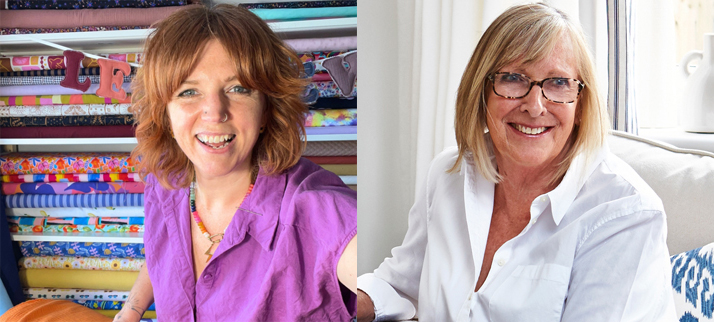
For October’s 40th anniversary issue, the team is recreating the first sewing pattern in the magazine: a pencil skirt. “It sounds very 1986,” says Jo. “But we’ve made it a little bit more modern. It’s a beautiful, smart skirt.”
The design has been created by pattern editor Becky Perry and overseen by Janet Palmer, who worked on the original pattern. Janet still checks all Prima’s sewing patterns today. “She offers a lovely guiding hand to make sure it remains as true as it’s always been,” says Jo.
Back then, the pattern was folded inside the magazine. “It was a giant thing with lots of different charts,” says Jo, who has been sifting through the archives. Today, it is printed on higher-quality paper and sent separately to members. Other readers can order it through the magazine.
Readers for life
Continuity is important to Prima. The magazine hasn’t just held onto some of the same content; it has held onto some of the same readers.
At the start of 2026, Jo asked the audience what the magazine has meant to them over the decades. One woman told her that she was a lonely young mother who pushed her pram to the newsagent for the debut issue after moving away from her colleagues. Another said she first picked up the magazine in a doctor’s surgery when she was pregnant. That child is now an adult and reads Prima, too. A third said she used to share the magazine with her mother and now sees it as part of their connection, years after her mother has passed away.
“What I keep hearing is that Prima has been a friend, it’s been a constant and it’s been a companion,” says Jo. “That means a lot to me.”
Life begins at 55
Prima’s core audience is women aged 55 and over, although Jo dislikes defining readers by age. “Everybody is welcome,” she says.
She describes Prima readers as smart, practical and supportive of the people around them, especially their families. “They’re the backbone of Britain,” she says. “They’re loyal to Prima, but they’re loyal to all their loved ones as well.”
They’re also routinely overlooked. “They are underrated and underestimated and undervalued, mainly by sections of advertising,” says Jo.
In 2025, research by the Advertising Standards Authority found that 44 per cent of UK adults believed older people were underrepresented or absent from adverts. Prima then surveyed more than 2,200 of its own readers for their views. Of those, 69 per cent thought advertising did a poor job of representing midlife women accurately, while 74 per cent rarely saw people their age shown as adventurous or stylish. A resounding 87 per cent said life begins at 55.
Jo sees evidence of that whenever she meets readers. At a recent Prima book club, a widow in her late seventies told her she had just bought an Interrail pass. She planned to travel alone, carrying her own bags. “She said, ‘I’d like to go somewhere that most people don’t,’” says Jo. “That’s what I’m championing. People have got to wake up to the fact that the 55-plus woman is brilliant.”
The power of listening
Jo includes her email address at the front of every issue and encourages readers to get in touch. Their thoughts help shape the magazine.
Prima’s opinion column is particularly effective at highlighting “the nitty-gritty issues” that touch readers’ lives. A piece about actors mumbling on TV prompted an influx of emails, as did columns on excessive packaging and the lack of public toilets. Some readers said a lack of toilets stopped them going out because they worried about finding one when they needed it. “We’ve got all this force,” says Jo. “I now want to go and do something about it. I could be marching up Downing Street any day!”
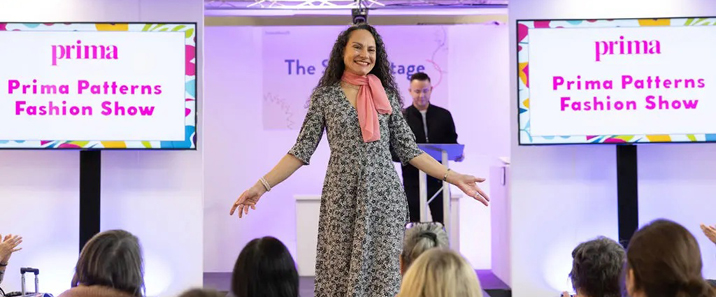
Listening also means leaving the office. Prima appears at craft events including Knit + Stitch at Alexandra Palace, which has a Prima Live Stage, the Festival of Quilts at Birmingham’s NEC and The Stitch Festival in Islington, where it holds its Pattern Fashion Show. Women take to the catwalk, each wearing an outfit they’ve made from a Prima pattern. “A lot of the women are so nervous and so unsure of themselves when they arrive and find this the most exhilarating thing they’ve done,” says Jo.
Readers who love making things but don’t necessarily want to be in the spotlight might prefer to join a Prima cruise. Last year, Prima partnered with Ambassador Cruise Line for a week-long Crafting at Sea voyage. The ship stopped at Honfleur, St Mary’s in the Isles of Scilly and Cobh in Ireland, while experts ran knitting, crochet, embroidery and macramé workshops. “It was a lot of fun,” says Jo. “The best thing you can do as an editor is to go and meet people you’re writing for because they remind you what it’s all about.”
Beyond print
Jo’s knowledge of the audience is also helping Prima online. The title’s average total circulation rose 9 per cent in 2025 to 179,424 copies per issue. Beneath that figure, print and digital moved in opposite directions. Print fell to 138,527, while digital more than doubled to 40,897.
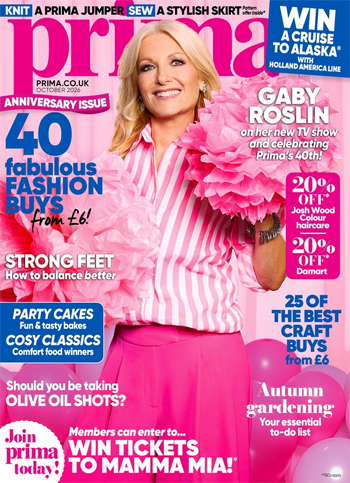
Print remains vital for Prima and still accounts for more than three-quarters of its circulation. It’s the sort of title, Jo says, that you might want to read in the bath: “It’s not a quick flick through. It’s a proper read.”
During the pandemic, subscriptions rose so sharply that Hearst UK, which now publishes Prima, increased its frequency from 12 to 13 issues a year. It has since returned to one issue a month but now produces bookazines on subjects ranging from crafting to health.
Digital, however, is supplying the growth. Online page views have increased 175 per cent year on year, says Jo. The unexpected success has been fashion. “We’ve got it right because we know that it’s about value for our readers.”
The team doesn’t choose clothes simply because they look good. “We might think, I wouldn’t wear that top because I couldn’t quite tuck it in my trousers or I’d find that collar a bit annoying,” says Jo. “We’re really thinking about everything.”
The team focuses on the high street and supermarkets because that’s where readers shop, but they will recommend a more expensive piece where the quality warrants the price. “We might say you’re going to get a lot of wear out of this or it’s really good quality,” says Jo. “These ladies are ready to spend when it’s worth it. They can trust us with what they’re spending their money on.”
Crafting a new community
Last year, Hearst UK launched Made Club, a paid online crafting community powered by Prima but open to everyone, whether they read the magazine or not.
Members receive a weekly newsletter and can join expert-led workshops and other events. They also get a 12-month digital subscription to a Hearst UK title – a way to introduce crafters to a wider portfolio that includes Country Living, Good Housekeeping and Red.
Jo won’t disclose membership figures, so it’s difficult to assess take-up. But she will say that crafters come from across the country. She has enjoyed joining some of its virtual meetings, where members share what they’ve been making.
Like Prima, Made Club is built around audience participation. “It almost runs itself,” says Jo. The “almost” is because Prima still takes the lead in making people feel part of it: Membership Director Imogen Cooper writes to every new member individually.
For Hearst UK, the strategy is clear: use Prima’s authority in craft to build a paid community that reaches beyond one magazine. It gives the publisher a direct relationship with members, recurring revenue and a product capable of drawing audiences from across its stable of titles.
During her eight years at Prima, Jo has seen herself as the custodian of a brand rather than an interventionist. “It’s this beautiful jewel in the crown and I’m looking after it for a while,” she says. “I’m polishing it and keeping it nice.”
Her plan for the next decade is not to predict the next great platform or impose a dramatic reinvention. It’s to keep following readers as their lives change. “I wouldn’t ever dream of changing Prima in any way other than in response to what the women are saying,” she says. “Our success will come down to whether we stay true to what we do and put the reader at the heart.
“I often say to readers, ‘It’s your Prima. What do you want?’” Just don’t suggest knitting more cardigans or babies could be wearing them for generations.
This article was first published in InPublishing magazine. If you would like to be added to the free mailing list to receive the magazine, please register here.