Ever since the New York Tribune duped readers in 1912 with a phoney picture of Theodore Roosevelt crossing a river astride a moose, the market for photographic fakery has been fair game.
Back then, a US senator actually introduced a bill “to prohibit the making, showing or distributing of fraudulent photographs”, the first of many attempts by publishers, photographic professionals and lawmakers to get a grip on playing fast and loose with the actualité.
In 1912, the publication ‘American Photography’ reportedly dismissed the proposal as “indefensible,” warning that it would leave photographers and publishers “continually liable to blackmailing suits”.
But, ultimately, the 1912 bill to ban fake photographs went nowhere and was never passed after some photographers felt the law was too broad and would expose professionals to endless lawsuits.
Fast forward more than 100 years and the debate still rages about the veracity of pictures seen in the broadcast, online and print media.
Those of us who have been rolling around in the media for most of their life might think we can spot a wrong ’un. A clunky Photoshopped image (yes, you, Princess of Wales) or a clumsy juxtaposition will lead us to have a closer look.
But now we have phones that boast they can remove people from pictures and move others around, drone images that could be from here, there or anywhere plus the artificial intelligence boffins who can spirit up anything that doesn’t go beyond the confines of its lame imagination.
Ollie Marsden, newly crowned Photojournalist of the Year at the British Journalism Awards, confesses he is a worried man.
“The future looks a bit bleak,” he says. “The disinformation and AI coming out of Israel’s war on Gaza, for example, has been shocking.
“On top of that, newsrooms and desks are cutting costs at every turn; it might not be long before they turn to AI. The industry feels like it’s in its death throes. However, AI goes against everything we as journalists should stand for.”
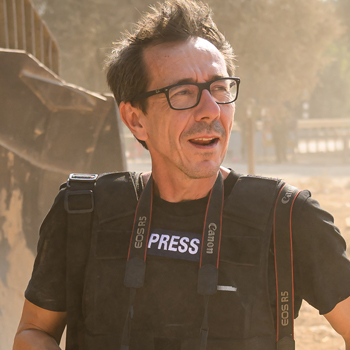
Jack Hill, after 22 years as a staff photographer at the Times, also has longer term concerns, especially for more generic, easily replaceable imagery.
“I suspect it will mean fewer photojournalists overall, but I’d like to believe there will still be a real appetite for honest, on-the-ground descriptions of events, the things AI can’t do because it can’t actually be there.
“The big question is whether editors and publishers will still be willing to pay for that kind of work.”
More important than ever
Facundo Arrizabalaga, who is documenting life in the capital as a news photographer for MyLondon, thinks that photojournalism today is more important than ever and disagrees that AI will replace photojournalists.
“It is important to remember that many of the most iconic photographs in history were captured with very basic, even rudimentary equipment, especially when judged by today’s standards,” he says.
“It is true that AI can create remarkable images in seconds, but at the same time, lacks lived context, ethical access and historical truth.”
All this leads us back to consider: what exactly is a photojournalist?
“My definition of photojournalism is the act of recording events for the benefit of those who can’t be there,” says Marsden. “I do it in the hope that it will inform, be didactic, and might stop future atrocities or negative events unfolding.
“I hate the term ‘bearing witness’ as it feels a bit overused and trite but I suppose it’s that. However, it’s more than that as well. For me it’s a need, a driving force in my gut, to tell these real human stories in an intimate and sensitive way for the benefit of not only those photographed but those viewing.”
For Hill, it is about having solid journalistic instincts of being able to understand, find and tell a story. “You also need empathy with your subjects and a strong sense of ethics and responsibility.
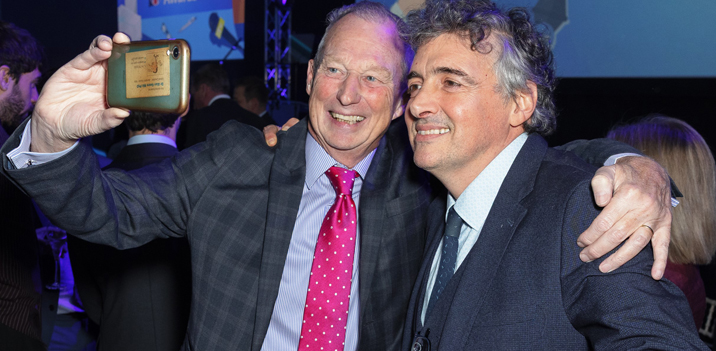
“You’re not just making photographs; we are being trusted to represent people truthfully often in times of significant distress.”
These are sentiments echoed by Arrizabalaga who contends that a photojournalist above all should be honest, telling stories with accuracy and truthfulness.
“It is really important to be able to spend time on stories in order to avoid clichés and build trust with the people they photograph,” he says. “Photojournalists document reality and should never over-sensationalise stories. I often see images that focus on sensationalism end up undermining truth and eroding trust with the public.”
Many observers stress the ethical elements of photojournalism. The Tate Gallery in London, which has been an enthusiastic supporter by showing exhibitions of photos says that photojournalism differs from other forms of photography, such as street photography or celebrity photography “by its need to remain honest and impartial”.
And the New York Times offers this guidance to readers on its website: “Anyone can take a picture, but not just anyone can be a photojournalist. There are two practical pillars of photojournalism: high ethical standards and a pursuit of objective truth.
“While photography in its different forms may be a means of self-expression, or artfully showcase truths about the human condition, the goal of photojournalism is reporting. The main purpose of photojournalism is to communicate a story and educate an audience.”
For a more rarified definition, we go to the seminal academic work of Paul Lowe and Jennifer Good, called ‘Understanding Photojournalism’: “The distinct features of the still photograph endow it with a unique quality in that it acts as a technologically enhanced, proxy form of vision, positioning the viewer as a witness of the scene with their own eyes, even if separated spatially and temporally from the actual event.”
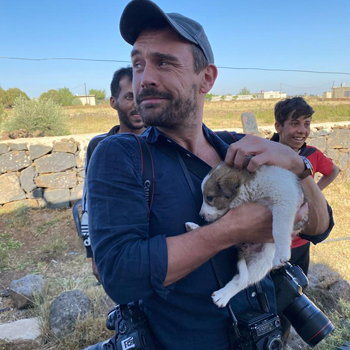
Last word, though, with award-winner Oliver Marsden: “I believe in the power and importance of photojournalism now more than ever because of AI.
“I feel that people want truth and they are wising up to the dangers of AI in journalism. We need to be on the ground to combat the lies. To show the truth so that no one can twist a narrative to suit their purpose. Whether that is a paper, an armed group or a government.
“Human beings being affected by real world events deserve human beings to be there to document their plight in a sensitive way. It’s the least we can do and the least they deserve.”
Don McCullin et al
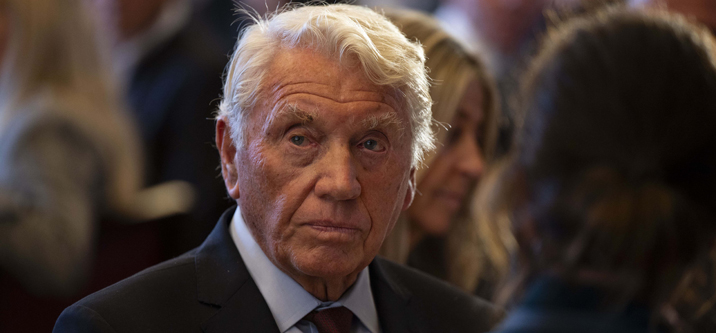
For many devotees of photographs on the printed page from the 1960s onwards, one name stands out more than any other – Don McCullin.
Now Sir Don McCullin CBE, he reflected on 60 years of covering wars, revolutions, famines and earthquakes in a piece published in the Sunday Times.
“Photography for me is not looking, it’s feeling. If you can’t feel what you’re looking at, then you’re never going to get others to feel anything when they look at your pictures,” McCullin, now 90, wrote.
“Photography has given me a life. The very least I could do was try and articulate these stories with as much compassion and clarity as they deserve, with as loud a voice as I could muster. Anything less would be mercenary.”
But, rather poignantly, his latest comments, made during a Q&A event with Jeremy Bowen at the Barbican in London, cut a rather despondent tone.
Asked what he was optimistic about, McCullin replied: “Absolutely nothing, actually. I have no faith in humanity. I feel selfishly aware of the fact that I’ve probably got two or three years left at my age.
“I’ve just passed my 90th birthday. I’m really ashamed that we haven’t achieved anything in the media. We haven’t changed anything. What have I been doing for the last 60 years? Totally wasting my time.”
The untimely deaths late last year of Martin Parr (aged 67) and Chris Steele-Perkins (78) robbed us of two other celebrated photographers.
Steele-Perkins was a photographer of life’s eccentricities who shunned celebrity portraiture in favour of chronicling the “absurdity, violence and humour” of everyday life.
He cut his teeth as a photographer on the Newcastle University student newspaper. “It turned out to be a good training ground,” he said, “because you’d do a football match, and then a rock concert, and then a portrait, and then you’d do something else. It was real situations with real deadlines, which meant there were real outcomes.
“Making serious efforts to find out more about the world you live in seems a pretty good idea, and photography gives you a fantastic way of doing that,” he said.
Like Steele-Perkins, Parr was also accepted by the prestigious Magnum agency – but only just. Some members did not take to his sardonic portrayal of British life or his use of full saturated colour photographs and campaigned against him.
Parr achieved the two-thirds majority required for admission by one vote and went on to have the satisfaction in 2014 of being elected as the president of Magnum, a post in which he served until 2017.
“We are so used to ingesting pictures of everywhere looking beautiful,” Parr said. “We are surrounded by propaganda, whether it be in travel supplements or holiday brochures or advertising. I just show things as I see them.”
This article was first published in InPublishing magazine. If you would like to be added to the free mailing list to receive the magazine, please register here.