Rachel Reeves or the commoner formerly known as Prince? It’s a toss up which of them has generated more newspaper column inches or broadcast airtime or proved the more unpopular over the last few extraordinary days for politics and the media. When it comes to unpopularity, Andrew Mountbatten Windsor probably still just edges it over the chancellor’s desperate efforts to pitch roll the manifesto-breaching tax rises looming in her November 26th Budget.
So let’s kick off with the ongoing coverage of the errant ex-royal. Much of the most damning verdicts significantly being delivered by female columnists, both right and left leaning.
Women columnists declare war
Take Polly Vernon’s Times column (November 3) headlined, “I’ve thought of one good thing Andrew has done. Can you guess what?”. Her opening paragraph: “As the Andrew Mountbatten Windsor situation unravels just a little bit more every day — it has, for example, been revealed that the former prince for years demanded that all references to Jeffrey Epstein’s victims be removed from palace statements… I realise that this singularly reviled man has done the country a favour.
“Because in his foul behaviour, his screaming arrogance, his stubborn entitlement, his inability to take any responsibility at all for the terrible pain of others, Andrew has pulled off a miraculous feat. He has united the country against him.”
It was also highly significant that only with the decision to totally defenestrate Andrew’s titles that the statement authorised by King Charles and Queen Camilla included for the first time a royal expression of sympathy for Epstein’s victims. Welcome, yes, but long overdue with opinion polls showing that while the public overwhelmingly supported the King’s action, almost 50% thought it should have happened years ago.
Good sources suggest that, in addition to Prince William, his wife the Princess of Wales and Queen Camilla, who both made a point of reading Virginia Giuffre’s harrowing beyond the grave memoir, strongly influenced King Charles’s final decision to totally, formally ostracise his scandal-soaked sibling.
A long hard look
Take Sunday Times columnist Camilla Long’s November 2nd excoriating article headlined “Andrew hasn’t only disgraced himself — he is trashing his mother’s reputation too”.
It included lines like, “To read anything about Andrew now, or even Sarah Ferguson, is to be beckoned into a disgusting, electrifying maelstrom of overspending, grifting, splurging, shame and greed. How can I put it? They are ill. Andrew Lownie’s book on the prince is filled with scams, snobbery and, frankly, dark comedy. I finished it thinking: this isn’t a book; it’s a case for revolution. It will make you want to burn their palaces down.
“In China, where Andrew repeatedly sought business, at least one alleged spy, Yang Tengbo, helped him set up his Pitch@Palace initiative. We are told Yang formed ‘an unusual degree of trust’ with the royal as part of an ‘elite capture’ operation by the Chinese state: Yang is now banned from entering the country. What did Andrew tell him?
“Yang wasn’t the even the only Chinese operative Andrew sucked up to: there was also Cai Qi, the man at the centre of parliament’s present spy scandal. And then there was the flame-haired Russian who ‘seduced him in the penthouse of a Knightsbridge hotel, loaning him £25,000 interest free’ so he could pay for one of the princesses to go to Switzerland. She also gave him a MacBook Pro ‘that had been bugged’. A Russian spy paid for one of their holidays. You just think what?”
Long also wrote tellingly: “The late Queen may not have known about the women: no one in the palace would want to tell Her Majesty that in Bangkok, her second son had been sent 40 prostitutes. But she must have known about the cash, because when things got really bad, she was the one who bailed them out. She once cleared at short notice a debt of £500,000 for Ferguson in 1994; £1.3m in today’s money. She showered them with gifts, money, land, yet it was never enough. What was she thinking. Nothing, clearly, - Andrew’ faults were simply beyond her imagination. He was her weakness and now he could easily trash her reign.”
Could Andrew end up in a US jail?
If the Palace and an overly compliant Starmer government thought that defenestrating Andrew would quell political and public pressure and media headlines then they are clearly mistaken. Many MPs plan to push for greater parliamentary scrutiny of royal finances and conduct, including the hitherto secret of where exactly the £12m came from the Queen spent to help Andrew settle the lawsuit brought against him by his abuse accuser Virginia Giuffre, Jeffrey Epostein’s best known victim. A woman he claims never to have met despite that infamous photograph of him with his arm around her taken by Epstein at the London home of his co-conspirator Ghislaine Maxwell. It enabled the then Duke of York to avoid testifying in a New York courtroom.
But renewed pressure is on the horizon from the US for Andrew to voluntarily testify before a congressional inquiry into the late Epstein’s sex trafficking of girls and young women. Should he volunteer? YES. Will he? Almost certainly NO. Should the King put pressure on him to do so for the sake of the monarchy’s future? YES.
But with increasing demands from US politicians — supported by a growing number of British MPs — for Andrew to appear, legal action by the US authorities to force him to testify under oath with the potential for criminal charges can’t be ruled out. Even if it doesn’t lead to broadcaster Jeremy Vine’s sensational prediction as a panellist on last Sunday’s Laura Kuenssberg’s BBC show that “within 5 years Andrew will end up in an American jail”.
Other female columnists to weigh in included the Guardian’s Marina Hyde on November 1 with the headline, “Now Andrew’s got his P45, a nation wonders: who’ll be next?”
Hyde writing: “I’ve covered this particular Andrew story for well over a decade, and it hopefully foes without saying that the ex-prince is an utterly grim, utterly dim disgrace. But for my money, this latest Windsor crisis is the most dangerous variety yet for the crown: philosophical. Far from securing the monarch’s future, the de-princing of Mr Mountbatten Windsor has hastened its end.”
Alongside her column, The Guardian’s main leader (admittedly the paper has never been ardent monarchists), carried the headline: “Prince Andrew’s downfall should prompt a wider reassessment of royalty”. For once, the Guardian may no longer be out of tune with the surging mood music among Britain’s younger generations. It concludes: “The King’s actions may prove to be too little too late. Recent events point to the need for a wider reset of Britain’s relationship with its royal family.”
For her part, award-winning Sarah Vine, writing in the Mail on Sunday (November 2) took a slightly different approach headlined: “Now Andrew should count his blessings — and seize the chance to leave behind the arrogant boor that was the old Prince”.
Personally, I can’t imagine the defenestrated one counting his blessings, but Ms Vine contends: “I have said it before, and it bears repeating: Andrew has not been convicted of any crime. He has not, technically, done anything illegal (that we know of). In the eyes of the law. He remains an innocent man.
“Nevertheless, he has faced — and continues to face — serious allegations. Scandal and sleaze seem to follow him wherever he goes (let’s not forget that business with the Chinese spy), he has, over the years, had ample opportunity to mount a defence of his behaviour and associations. And yet at every turn his response has only strengthened the case for the prosecution. From his high-handed dismissal of Virginia Giuffre’s accusations to his repeated attempts to conceal the truth about the nature of his relationship with the late financier Jeffrey Epstein, it’s all somehow added up to a very grubby picture of a very grubby life.”
Or, perhaps, as I put it in a weekend TV interview: “Andrew remains the living proof that you can be in a low life in very high places.”
Millions of Brits, struggling to make ends meet even before Reeves’ draconian budget, will hardly sympathise with Andrew’s forced eviction from his rent-free 300 room Windsor mansion to a much more modest, but still luxurious property on the King’s private Sandringham estate with the monarch tossing in a reputed £100,000 annual stipend to his toxic brother’s £20k-a-year Royal Navy pension.
Some MPs and investigative journalists are still set on probing whatever wealth the onetime UK trade envoy could have stashed away from his dubious dealings with shady foreign contacts he cultivated. Speculation remains that at least one Gulf state regime is considering offering him free use of a mansion with access to plenty of sunshine and luxurious courses to indulge his passion for golf. Austerity? Hardly.
The beginning of the end, warns Dorries.
Meanwhile, the Daily Mail’s Nadine Dorries, the former Tory cabinet minister now a defector to Reform, advocates a major shakeup of the monarchy under the headline: “Andrew has pulled the monarchy to the black hole of oblivion. Here’s what William must do (and not do) to rescue it”.
The onetime culture secretary’s November 4 column offers: “Much of what King Charles and his mother, the late Queen Elizabeth, had been working toward has, thanks to Andrew, been destroyed. His disgrace marks the beginning of the end for the monarchy as we know it. Until recent events, I thought the royals had pulled it off, that they’d kept the show on the road despite the antics of Prince Harry and his plastic princess Meghan.
“Following the King’s decisive action in banishing Andrew to Norfolk, there will be plenty who believe the furore surrounding his friendship with paedophile Jeffrey Epstein will fade and, in due course, life for the Royal Family will return to normal. I am very certain that it won’t. There will be more bombshells, more shockwaves. Who would bet against Sarah Ferguson writing a memoir of her own one day, her quill pen sharpened and dipped in bitterness? Her motive will be to earn money — her excuse to clear her name.”
Indeed, sources tell me at least two US publishers are poised to approach Feguson about a ‘tell all’ book deal.
A royalist by instinct, Dorries’ advice to Prince William is to focus his future on “those aspects of royal life vulnerable to attack from the public and parliament. Should Harry retain his title as a prince? What royal costs should be funded by the public purse. These are the real questions — and Prince William must find answers before others do because the point of no return is already behind him.”
Bonfire of the promises?
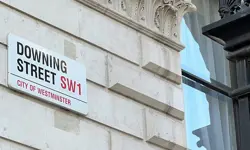
The November 5th front page headlines made uneasy reading for the chancellor. But Rachel Reeves could hardly have been surprised in the wake of her highly unusual Downing Street pre-Budget speech and press conference in which she clearly indicated (without quite saying so) breaching Labour’s solemn election-winning manifesto pledge, her own post-Budget promise last year and smashing the 50-year taboo on hiking the basic rate of income tax. Whether by 1 or 2p in the £ seems the only question mark. While the manifesto pledge not to raise VAT will remain in tact, the one on employee National Insurance looks vulnerable.
If Rachel Reeves was bidding to rival the man formerly known as prince in the national unpopularity stakes on Bonfire Night she could hardly have done better.
The November 5 headlines tell the story. “Reeves lays ground for 1970s-style tax increase” (The Times), “Reeves paves way to break promise on income tax” (the FT), “Reeves poised to raise income tax and break 50-year taboo” (the I paper), “MAKE IT FAIR, RACHEL” (The Daily Mirror, pleadingly).
“REEVES IS JUST ‘BLAMING EVERYONE ELSE FOR CHAOS’”, (The Daily Express, giving its splash platform over to Tory leader Kemi Badenoch.)
For once, Badenoch had come up with a memorable new word on Tuesday as she attacked Reeves’ Downing Street speech which she christened, “WAFFLE BOMB”. We can expect to hear that one popping up repeatedly between now and the budget and through to the general election and potential inclusion in the next dictionary update!
So impressed were the Daily Mail with it that it incorporated the Waffle Bomb into the front-page headline promoting Andrew Neil’s inside column along with its trail: “The speech was all bluster and lies. But one thing is clear: Every striver in the land is about to be clobbered for her risible incompetence”.
The Mail had already made its mind up before Reeves even spoke. Its November 4 splash headline: “REEVES SOFTENS US UP FOR TAX BETRAYAL” …along with displaying the chancellor’s November 25 public pledge to the CBI: “I’m really clear, I’m not coming back with more borrowing or more taxes”.
Also inside a gleeful Mail, its Westminster sketch writer Quentin Letts was in his full OTT personal attack mode. His column headline: “Reeves was a wan prophet of perdition, honking like a faulty cyborg”. Not for the first time, Letts took cruel delight in mocking the chancellor’s nasal speech tone, her face, her hair, her dress sense.
In the Times, columnist Lord Daniel Finkelstein, a One Nation Tory, went in harder on Reeves than usual with: “If Reeves increases income tax, she will have to resign… like Jim Callaghan in 1967, this chancellor will have to pay the political price for going back on her oft-repeated pledge”. Conceding he originally thought Reeves’ manifesto breaking hints were a tactical bluff, Danny F concludes: “If she raises income tax and tries to stay she will be like Wile E Coyote. She will have run off the cliff and there will be nothing below her except thin air. It’s only a matter of time before gravity does the rest.”
Times political sketch writer Tom Peck chipped in with: “The Breakfast TV schedules were stopped in their tracks… The British people, doing their best to go about their day at 8.10am on a Tuesday, may not take kindly to being told, in every possible way but the simple truth, that their priority is to pay more tax.”
Pitch rolling with the punches
The left-leaning Guardian’s award-winning political sketch writer John Crace wasn’t offering Reeves too much cheer either. The headline on his column: “Reeves wants to talk about the budget, but she’s taken a vow of white noise”. Crace writes: “Tuesday was the chancellor’s Lance Corporal Jones ‘Don’t Panic! Don’t Panic!’ moment. Normally a chancellor takes a vow of silence in the week’s leading up to the budget, locked away in the Treasury, head down over economic forecasts, anxious to give nothing away.
“But not this year. Now Rachel wanted to give away as many clues as possible. Call it the budget performed in interpretative dance… A press conference that takes place at 8.10am in Downing Street and is broadcast on nearly every terrestrial channel screams: ‘Help, things have gone tits up!’ Anyone watching would have been well advised to run for cover. You could see the bad news coming a mile away.
“This was Reeves trying to catch a break. Hoping to get in the bad headlines early, so that, come 26 November, she will get an easier ride.”
Although Crace didn’t use it, many political journalists seized on air on the current vogue buzzword ‘pitch rolling’ to sum up Reeves’ speech strategy.
Many of my Labour MP contacts were seriously depressed after Reeves’ speech, although only a handful thought it could trigger the chancellor or Keir Starmer’s pre-Christmas downfall. That said, the prevailing sentiment was that breaking a manifesto pledge on income tax could be the ‘kiss of death’ at next May’s elections. “We’ll be handing Reform, the Tories, the Greens, LibDems, the SNP and Plaid a sword to chop our heads off with,” was how one put it. Another offered: “Governments have reversed manifesto policies before, but without making such a big point of promising not to as we did.”
The splits within Labour’s ranks became clear late this week when the party’s newly elected deputy leader, Lucy Powell, made a headline-hitting intervention by warning Reeves and Starmer against making manifesto breaking tax rises in the budget.
Morgan McFolly?
Readers of this column might recall that pre and post the general election, I argued (as a Labour simpatico commentator) that the manifesto no tax hikes pledges were a folly, locking the Starmer government into a straitjacket that was totally unnecessary to win an election against the broken, discredited Tories. It was guaranteed to be a Morgan McSweeney inspired hostage to misfortune. Most economists were alive to the reality that the combination of Rachel Reeves’ ambitions, the still toxic legacies of the Truss budget catastrophe, Brexit, Trump’s tariff addiction and the endless Ukraine war impact were always highly likely to require tax increases, the only question being which ones, when and how hard.
In brutal reality, there is a legitimate argument for increasing income tax in these critical economic times. The big electoral challenge ahead is justifying it to the electorate when you’re breaking a key manifesto pledge that helped put you in power.
Mission impossible? Maybe not for a leadership blessed with charisma, eloquence, exceptional storytelling skills; the sort the Downing Street machine of heyday Blair years possessed. But not, alas, those shared by Rachel Reeves and Keir Starmer and a government bedevilled by a communications problem.
I’m now waiting to see which pollster might be first to pose the question: Who’s the most unpopular, the chancellor or a fallen prince?
Stop press:
In the race for the Great Unpopularity Stakes, we have a late runner. David “Calamity” Lammy. The justice secretary and deputy prime minister’s debut standing in for Starmer at PMQs on Wednesday turned out to be an arrogant, aggressive, evasive disaster. It wasn’t helped by his failure to wear a poppy until a front bench colleague slipped him one.
It was disappointing that opposition parties failed in their efforts to have him recalled to face a grilling over why he “misled” the commons by failing to reveal he knew about the latest accidental prisoner release fiasco under repeated questioning by Tory stand-in James Cartlidge.
Lammy is now under severe pressure and surely has to face an urgent press conference with parliament in recess.
Over in Brazil, where he’s attending the COP climate crisis conference, Keir Starmer must be pondering the critical question whether he can afford to keep Lammy in post.
Unsurprisingly, the Lammy / jail blunder story dominated several front pages on Thursday, as well as continuing on broadcast news bulletins and phone-in shows. None of it welcome viewing or listening to the currently “missing” justice minister who delegated a junior colleague to do the studio rounds.