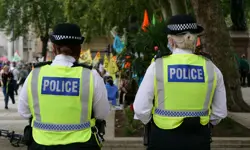
Back in the 1990s, when the only thing colour in newsprint was the masthead, I spent two happy years as a crime reporter at the Southampton Echo. My working day often began at 6.30am with the first call to Hampshire Police headquarters’ “voicebank”, followed by rounds of calls to the city’s district stations, always starting with the uniform sergeant on duty and then moving on to CID if anything more serious was stirring.
Officers picked up the phone. They spoke openly about overnight incidents, arrests and ongoing inquiries. Unfortunately for the people of Southampton, the city had a high crime rate at the time. Fortunately, it was matched by a strong detection and arrest rate. From a reporter’s point of view, that often meant I landed the splash and, on a busy news day, secured the P1 lead across several daily editions of the paper, on entirely different crime stories. It was a clear sign of how much was happening in the city and, if I am honest, a small professional triumph for a young reporter quietly counting bylines.
The police were happy to meet me and my fellow crime reporter, Mark Jones, in person too. Sometimes it was tea in the station canteen. Occasionally, once we had all clocked off, it was a drink in the newspaper office’s local pub.
We were invited on ride-alongs. There were background briefings galore, with the off-the-record rules clearly understood and respected. We went to police Christmas parties. I even remember joining a large police CID event for a murder mystery evening where, rather satisfyingly, the Echo team was the only one to correctly identify the “killer”.
My editor, Pat Flemming, had a strong relationship with the Hampshire chief constable, who would often visit the office for a meet and greet. Together, they agreed that I should spend six weeks working out of a very busy police station, filing a daily full-page column from the back of a police car, a CID vice van, or the confines of a custody suite.
Trust, caution and clear ground rules meant the project ran without friction from officers or the CPS, and it gave readers a far better understanding of how their local force was fighting crime.
I recount these anecdotes to illustrate how effective the relationship between police and press can be when trust is properly established. That confidence came from the top, from the chief constable, and from my newspaper’s commitment to responsible journalism.
My next few years on national newspapers in London carried much of that same spirit in dealing with UK-wide police forces. It felt like a partnership, not a cosy one and not without friction, but one rooted in a shared sense of purpose. There was an acceptance that journalism and policing, while often uncomfortable bedfellows, were both operating in the public interest.
Somewhere along the line, that relationship soured.
Breakdown in trust
The Leveson Inquiry was a watershed moment. Revelations about payments to police officers, followed by arrests and investigations, cast a long shadow over legitimate relationships between reporters and forces, even though no journalists were ultimately convicted of criminal wrongdoing in relation to those allegations. Concerns about police corruption lingered. More recently, appalling cases involving serving officers, including the murder of Sarah Everard by Wayne Couzens, have rightly shaken public confidence and prompted deep soul searching within policing itself.
Against that backdrop, trust became harder to sustain. Access tightened. Informal briefings became rarer, as both sides sought to recalibrate how information was shared and received.
It was the disappearance of Nicola Bulley, however, that brought into sharp focus just how far things had shifted.
As the search continued at pace, there were no background briefings available to the accredited press over a prolonged period that would have helped journalists more fully understand the circumstances and counter the wild rumours and disinformation spreading on social media.
That absence created a vacuum. And as every editor knows, vacuums get filled.
The subsequent inquiry into the handling of the case examined many aspects of the police response. But it also shone a light on the fractured relationship between the press and the police, and the consequences of operating without shared expectations in fast-moving, high-pressure situations. One of its clearest messages was that this relationship needed to be rebuilt.
Both policing leaders and the media industry agreed.
Launch of the Policing and Media Charter
What followed was not a quick fix, nor a cosmetic response. Over the past two years, the Society of Editors has worked closely with policing colleagues and fellow industry bodies to address these issues seriously and constructively. Together with the Media Lawyers Association, the Crime Reporters’ Association and the News Media Association, and through sustained engagement with the National Police Chiefs’ Council and the College of Policing, we set about developing the Policing and Media Charter.
Launched at the Society of Editors’ annual conference in March 2026, the charter is the product of long, carefully curated meetings, sessions and workshops involving senior editors, police communicators and operational leaders.
These discussions were also frank. Editors, reporters and crime editors, including Rebecca Camber of the Daily Mail, spoke candidly about the pressures journalists face when information is withheld or drip fed. Police representatives were equally open about the realities of live investigations and the increasing demands placed on overstretched communications teams. There was no appetite for blame shifting. Only for clarity.
The resulting document is deliberately practical in tone. It is intended as a guide for police officers, police communications professionals, journalists and editors alike. It sets out shared principles around transparency, proportionality, background briefings and respect for due process, while acknowledging the pressures inherent in breaking news situations.
It does not promise perfection. No charter could. Fast moving cases will always involve difficult judgement calls, and mistakes will still happen. What this framework offers instead is something far more valuable: a shared baseline, a reference point when decisions are being made under pressure.
Its significance is reinforced by the fact that it has the backing of national policing leaders and aligns with updated police Authorised Professional Practice guidance on communications and media.
That matters. It signals that this is not an aspirational statement, but a working tool. And the implications are substantial. A more professional, transparent relationship ultimately serves the public interest, which remains the foundation of both policing and journalism.
The charter also illustrates something broader about how our industry needs to operate in the years ahead. Many of the most pressing challenges facing publishing cannot be solved by individual organisations acting alone.
Other pressing issues
At our conference, editors and publishers debated the sustainability of local journalism, the safety of reporters covering protests and conflict, the erosion of access to public institutions, and the profound implications of artificial intelligence for copyright, attribution and business models.
On access, the Society of Editors continues to challenge barriers that inhibit journalists’ ability to report freely and effectively, including limitations on access to public bodies, decision makers and information. Recent attempts by the Reform Party to restrict access for local newspapers in Nottingham, now resolved, underlined how easily such barriers can arise and how important it is to challenge them early and collectively.
Access to political power is another growing concern. The decision to restrict routine Downing Street briefings in the afternoons may seem practical to government, but it sends a troubling signal about openness and accountability at a time when trust in institutions is already fragile.
On safety, we remain concerned about journalists being targeted, threatened and intimidated for doing their jobs. We support the work currently being undertaken by the DCMS-led committee on journalist safety, which brings together representatives from across the press and government. We are also pressing for stronger action against abusive legal threats, including strategic lawsuits against public participation, or SLAPPs, which are increasingly used to deter investigative reporting and exhaust journalists through the legal process.
Artificial intelligence presents perhaps the most complex challenge of all. While publishers are rightly exploring how new technologies can support journalism, unresolved questions remain around the use of copyrighted content, transparency and the long-term value of trusted reporting in an algorithm driven environment. These debates are moving quickly and, while recent competition and regulatory recommendations have been welcomed by publishers, sustained policy engagement remains essential if original journalism is to be properly valued and protected.
All of this points to the importance of government engagement.
The importance of government engagement has come into sharper focus in recent weeks with Culture Secretary Lisa Nandy setting out a renewed commitment to supporting the sustainability of the UK’s news media, including targeted funding and policy initiatives to strengthen local journalism.
This is a welcome step. Recognition at the highest levels of government must translate into practical support that enables the industry to adapt and thrive, and the signals suggest a more constructive phase of engagement.
However, concerns remain. The decision by the DofE to withdraw funding for journalism courses risks weakening the pipeline of future reporters.
If we are serious about trusted reporting, investment in skills must sit alongside wider sustainability measures, and support for journalism education should be reconsidered.
Publishing is undergoing profound change. Decisions taken now on access, AI, safety and sustainability will shape the industry for a generation. Constructive engagement, and timely action, from the government must continue at pace if we are serious about protecting a free, viable and trusted press.
Despite these challenges, I remain cautiously optimistic. The Policing and Media Charter shows what can be achieved when organisations come together in good faith, with seriousness and patience. Collaboration does not mean compromising principles; it means strengthening the shared frameworks that allow journalism to operate effectively in the public interest.
Journalism has always rested on independence and its role in scrutinising and challenging power. But it has also depended on relationships: with readers and audiences, with fellow publishers, with other industry and professional bodies working to defend journalism, and with public institutions including policing and government. Maintaining those relationships, and the mutual understanding that underpins them, is not a one-off task. It is a continual process, and it is vital.
If we can apply the same collective intent that underpinned the Policing and Media Charter to the wider challenges facing publishing today, there is every reason to believe that our industry can adapt, endure and continue to serve the public interest in a rapidly changing world.
This article was first published in InPublishing magazine. If you would like to be added to the free mailing list to receive the magazine, please register here.