As a dedicated football fan, Keir Starmer knows all about the old game of two halves cliché. On Thursday, March 11th, the prime minister literally lived it. And he’s been living it ever since, politically and media wise, and will continue to live it until the Iran War ends and the May 7th elections that could decide his fate are over.
The first half was probably his finest PMQs man-of-the-match performance when, boosted by the polls showing that, for once, public opinion was on his side, he scored heavily against floundering Kemi Badenoch over resisting those gung-ho calls to join President Trump’s blitzing of Iran. Starmer also managed to throw in an effective taunt at Trump cheerleader-in-chief Nigel Farage, silent and looking uncomfortable on the Commons benches. Opposition benches looked glum, Labour’s cheered.
The second half, in the afternoon, with the PM back in the No 10 dressing room, proved a disastrous contrast as the first tranche of documents surrounding Peter Mandelson’s appointment as Our Man in Washington was rolled out by an apologetic Darren Jones, Starmer’s chief secretary and chancellor of the Duchy of Lancaster. Normally a smooth operator, Jones had the manner of a defender who knew he was handing his opponents an open goal.
The Mandelson penalty
This time it was Labour’s benches looking grim, and the Opposition jeering, mocking the PM’s absence and calling for the red card on his premiership. The open goal certainly wasn’t missed by Jones’ Tory Shadow, Alex Burghart who went in hard with: “Now the prime minster claims that he was lied to. He wasn’t lied to by this due diligence document. And it may be that Mandelson denied these claims.
“And if so, maybe the prime minister was lied to, but he was lied to by an inveterate liar who had been fired twice before… and we’re supposed to believe that the prime minister, who was once the chief prosecutor in the country, couldn’t see through this nonsense. It beggars belief.”
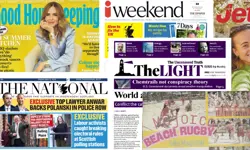
Among the revelations in the documents was something this column had previously disclosed. That Starmer’s national security adviser, Jonathan Powell, a Blair era veteran familiar with Mandelson, had cautioned against his appointment. The right-wing papers certainly seized on that, with it making the front pages of The Times and the Mail. ‘NOT FIT TO LEAD THE COUNTRY’ screamed the Mail’s splash headline (March 12th).
It wasn’t just the right-wing titles who reflected fury over Mandelson being paid £75 grand – double his entitlement – after being sacked over allegedly lying about the extent of his relationship with the late billionaire paedophile Jeffrey Epstein. Let alone the revelation he’d sought more than half a million originally!
Ducking responsibility
But it took another couple of days for the papers to pick up on something that wasn’t obviously clear from the documents but this column had previously revealed. That the prime minister hadn’t personally, forensically grilled Mandelson, despite what was already known about his Epstein history, and delegated it to two senior aides who were both Mandelson proteges, before going ahead with his ill-fated Washington appointment. To me, that extraordinary misjudgement – especially by a PM who makes great play of his DPP pedigree – will be almost impossible for Starmer to recover from.
The Mail’s March 14 splash certainly – if belatedly – seized on the PM’s failure to question Mandelson himself before appointing him with the headline: ‘STARMER’S DERELICTION OF DUTY’.
But any hope Starmer has of repairing the damage rests on the first half back on March 11th and that Commons shootout. Labour strategists believe that the PM’s refusal to join the US / Israel Iran War and his increasing willingness to stand up to Trump and shrug off the increasingly erratic president’s personal taunts, tantrums, demands and downright untruths. Can it, they are asking, limit the scale of the government’s ballot box battering on May 7th.? Could it even mitigate with the public the reputational damage caused by Starmer’s major Mandelson misjudgement?
Linguistic contortions kick in
Certainly, the growing evidence that Trump launched the Iran War without a thought through plan has seen the likes of Farage and Badenoch not only backtracking but performing linguistic contortions to pretend they didn’t really say what everyone heard them say about Britain failing to join the US / Israel offensive. An almost certainly illegal war that the US president hadn’t consulted his allies about anyway. The polls consistently show a clear majority of the public prefer Starmer’s cautious approach. Even if they haven’t as yet done much for the PM’s personal ratings. Not helped by the polls also reflecting a hefty majority condemning the PM’s handling of the Mandelson scandal. That game of two halves analogy again!
Right-wing papers who echoed the belligerent Farage / Badenoch demand for Britain to join the direct attacks on Iran – along with the accusation Starmer was destroying the so-called ‘Special Relationship’ with the US – have toned that down. Cognisant, no doubt, of the polls but also Trump’s irrational anti-British rhetoric and inconsistent, incoherent and often contradictory claims about how his war is going. Trump’s decision to lift sanctions on Russian oil makes Putin the big bucks winner so far in the conflict, fuelling further his war against Ukraine and flying in the face of the papers’ longstanding support for the Ukrainian cause.
Playing both sides at once, Nigel?
But with one poll this week showing 49% of Reform members still back Trump’s war decision, Farage tried to hedge his bets and keep Trump happy. By arguing that Britain ought to have gone in with the US except the state of our military ruled it out.
As Andrew Neil’s March 14 Mail column headline put it: ‘Iran’s allies in Moscow and Beijing are cock-a-hoop. And I hear European and Gulf leaders are privately fuming at Trump’s folly’. It was something of a Neil U-turn; his previous column had expressed the thought Trump’s action might bring about a quick victory and the downfall of Iran’s theocratic dictatorship.
But this one began with: ‘We’ve won’, President Trump declared earlier this week. As he spoke, Iranian missiles and drones continued to rain down on America’s beleaguered allies in the Gulf, the Tyrants of Tehran tightened their already iron grip on domestic dissent, oil settled at around $100 a barrel (versus $60 before America and Israel started bombing Iran) and cargo ships trying to make it through the Straits of Hormuz were destroyed , confirming the Iranian regime has its boot pressed hard on the global economy’s throat.
“If this is what the president considers victory to be, then you wonder what he thinks defeat would look like. Yes, the regime has taken a terrible pounding. But here’s the rub: It’s still standing, still functioning, still retaliating, still in control of the streets as well as the Strait. The regime is gambling that if it can raise the cost of oil and gas high enough for long enough – with all that would entail in the higher prices and lost jobs for the world’s major economies – then Trump will soon declare victory (as he always does, whatever the facts) and go home.”
Neil changes course
Elsewhere in his column, Neil rightly observes: “The Gulf states – Bahrain, Kuwait, Oman, Qatar, Saudi Arabia and the United Arab Emirates – are in despair. Their chances of rebuilding their reputation for safety and security while the regime in Tehran remains intact are close to zero. Already some Gulf leaders are mulling over how to make their peace with Tehran. European leaders are no less distraught. A war with no real purpose or decent outcome risks throwing their already stagnant economies into recession yet again, fanning social unrest, fuelling extremists on the left and right. One source told me that European leaders now exchange phone calls ‘privately fuming’ at what Trump has done.
“But Russia is the biggest winner of all. Just as its treasury coffers were running dry and even its sovereign wealth fund was running out of liquid assets to pay for the war in Ukraine, the spike in oil and gas prices has been a huge, unexpected bonus. No wonder Russia is providing Iran with intelligence, including satellite imagery and drone targeting to help Tehran strike the US and its allies in the region.
“Bizarrely, even Trump is helping out: In an attempt to stop oil prices soaring out of control, the US Treasury has eased sanctions to allow the market to buy Russian oil cargoes already at sea. No doubt President Putin is grateful to his old pal in the White House.”
But if European leaders – including Keir Starmer – have been holding those private phone calls bemoaning the Trump war folly, it broke nearer the surface with another typical Trumpian twist over the weekend. Having boasted how he’s won the war without his NATO allies’ help, Trump called on the UK, France, Germany, Italy, Spain, South Korea, Australia and Japan to send warships to help the US reopen the Straits of Hormuz. Somewhat bizarrely, he demanded, “send ships so that the Strait will no longer be threatened by a nation that has been totally decapitated”. So much, then, for his boast the war was already won?
No takers for Trump?
Fair to say, it fell largely on deaf ears, with no takers. Much to Trump’s chagrin who told the Financial Times NATO faces a “very bad future” if it doesn’t comply with his demand.
The irony of Trump’s request contrasting with his previous debunking boasts that America and Israel didn’t need any help, thank you, wasn’t lost on UK papers both left and right leaning.
In a weekend phone call between Trump and Keir Starmer, the prime minister effectively refused to send any warships but did apparently offer mine-hunting drones, missile interceptors and intelligence support to help reopen the Strait. It did little to placate the US president apparently.
Although the UK wasn’t alone in rejecting his ‘warship’ demand, Starmer has become the target-in-chief for Trump’s fury. Having previously mocked him as ‘No Churchill’, the president told the US press corp aboard Air Force One that Starmer’s response to the conflict is ‘terrible’.
Going on to say, “I was very surprised with the United Kingdom because two weeks ago, I said, ‘Why don’t you send some ships over’ and he really didn’t want to do it. I said, ‘You don’t want to do it? We’ve been with you. You’re our oldest ally, the Rolls Royce alliance, and we spend a lot of money on NATO and all of these things to protect you.”
Hell hath no fury, it seems, like a POTUS who thinks America’s ‘oldest ally’ ought to sign up for the war he’s titled ‘Epic Fury’.
But as the headline in a Mail op-ed by Mark Almond, director of Oxford’s Crisis Research Institute, put it on March 16th: ‘Trump has belittled and scorned his allies. No wonder so few of them are now willing to help’.
Flip flopper in chief?
Almond’s article opened with: “Donald Trump, never a president to care about consistency in his foreign policy, had become the flip-flopper in chief. Despite insisting that the US has already destroyed 100% of Iran’s military capability, he calls for America’s allies to bolster his navy in the Gulf in order to keep the Strait of Hormuz open to super tankers.”
In common with many senior European military experts, Almond flags up that Trump’s apparent plan to send in the marines to seize control of Iran’s major oil terminal on Kharg Island is fraught with danger, would take weeks to organise and carry out and could only extend the war and escalate the global economic carnage.
One of the more remarkable insights into Trump’s flawed thinking before going to war came in a couple of his own tsunami of Truth Social posts, many in the depth of the night. In them, the president admitted he hadn’t bargained on Iran closing the Hormuz strait. In that case, he couldn’t have been listening to the army of international military experts who were only too aware it was Iran’s ultimate weapon. Invading Kharg Island and holding it would also be a high-risk domestic political gamble by Trump, given the polls show US public opinion is strongly opposed to the war and even more hostile to putting US boots on the ground in Iran with its ‘betrayal’ of Trump’s ‘no more forever foreign wars’ election campaign pledge.
‘Trump turns fire back on Starmer’ made the Times front page lead headline on Tuesday, following Monday’s Downing Street press conference in which the prime minister delivered his sharpest public display of disagreement / divergence with the president. ‘PM vows UK will resist US pressure to join Iran war’ was the Guardian’s splash headline.
Starmer’s key line, “While taking the necessary action to defend our ourselves and our allies, we will not be drawn into the wider war” figured prominently on most front pages and on the broadcast bulletins.
Starmer spots an opportunity
The Guardian’s award-winning political sketch writer, John Crace, reviewed the presser with this headline: ‘Keir’s instinct to stay out of the war has been a good one. Even so, the strain is showing’. Crace opened with: “It was a message that could just as easily have been given via a ministerial statement in the Commons. But Keir Starmer needs every break he can get at the moment and he wasn’t going to pass up the chance to look like a world leader at a press conference in No 10. The advantages were obvious. No need to have to listen to Kemi Badenoch drone on for five minutes with her revisionist fantasies in reply. Avoid the danger of loads of backbench MPs observing that Donald Trump is a deranged halfwit who doesn’t know what he’s doing. But, best of all, a press conference was ideal because the US war with Iran is one of the issues on which the prime minister’s judgement has been right all along.
“Just over two weeks in and it’s increasingly looking like The Donald is only in the war for its entertainment value. Just last weekend, he was saying he might continue bombing Kharg Island for fun. There has never been a plan. Not so long ago he was saying the Brits were late to the party and he didn’t need them anyway. Now he is begging for help in keeping open the strait of Hormuz.”
Crace concludes his column with: “No point ending up as collateral damage in an illegal war. After all, it wasn’t as if Trump would be at all grateful for any help we did give. Taking Trump at his word is a thankless one-way ticket to hell. Starmer’s still not quite brave enough – or reckless enough – to spell out the US president’s shortcomings. Though you feel the moment may be getting close. One day it might be a relief for him to say what he really thinks. But we’re not quite there yet.”
In more restrained terms, BBC Political Editor Chris Mason struck a not dissimilar note in a website article on Tuesday, headlined: ‘Why Starmer thinks he’s called it right on war despite Trump barbs’.
Whose opportunity is it?
Wrote Mason: “On nearly every occasion President Trump has found himself in front of a camera in the last few days, he has had a pop at the prime minister and the UK. We have long known the current occupier of the White House is rarely a man of subtlety, but the frequency with which he has repeated his criticisms, often unprompted, stands out. As ever, his language is colourful and quotable.
“The UK used to be the ‘Rolls Royce of allies’ he said, adding that he pleaded with Sir Keir Starmer to be decisive and implying the prime minister couldn’t make up his mind without consulting others. Ouch.
“This is definitely awkward for Starmer, the further souring of his relationship with Trump, but it isn’t definitely, wholeheartedly negative from his point of view.
“Firstly, there is a tussle over the facts – in other words, precisely what was discussed in the calls between the two men in the last few weeks: what was requested and what was offered. Downing Street, as ever, is at pains not to get involved in a public mudslinging contest with the White House.
“But folk I talk to in Whitehall think the president has garbled some of the details of what the leaders discussed privately. For instance, I am told there was never a request to provide aircraft carriers in the Gulf, nor an offer to provide them.”
My own sources confirm much of Mason’s piece. For starters, Trump’s claim the PM offered him two aircraft carries is pure invention. We only have one in operational service and that’s committed to a NATO mission on another Trumpian obsession… Greenland.
As for the president mocking the prime minister over ‘consulting others’, it merely illustrates Trump’s misunderstanding of how cabinet collective responsibility works in the UK compared to his own autocratic approach to leadership. The difference, arguably, explaining how The Donald led America into a war without an endgame plan? The cost of which could well be losing both houses of Congress come the November mid-term elections and relegating The Great Narcissist to the rank of lame duck POTUS.
MAGA revolt marks tricksy Tuesday
Tuesday turned out to be a surreal day even by the standards of this war. It kicked off with a Trump post on his Truth Social platform declaring ‘We no longer ‘need’ or desire, the NATO countries assistance – WE NEVER DID!”
Not long afterwards, top US counterterrorism director Joe Kent (handpicked by Trump originally and normally a MAGA loyalist) resigned in protest over the war saying, “Iran posed no imminent threat to our nation, and it is clear that we started this war due to pressure from Israel and its powerful American lobby… this echo chamber was used to deceive you into believing that Iran posed an imminent threat to the United Sates. This was a lie and the same tactic the Israelis used to draw us into the disastrous Iraq war that cost our nation the lives of thousands of our best men and women. We cannot make the same mistake again.” His explosive resignation letter urged the president to “change course”.
What makes the resignation particularly embarrassing is that Kent, who had served with the military and with the CIA and whose military wife was killed on active service in Syria, is far from a liberal convert, but a far-right figure with links to the Proud Boys who infamously stormed Capitol Hill. He has also publicly championed Trump’s discredited claim that Joe Biden stole an election victory from him.
Worse still, several prominent MAGA podcasters and influencers quickly came out in support of Kent and his claim the president was manipulated into the war by Israel. The widening cracks in the MAGA movement hardly augur well for Trump’s mid-term prospects.
An additional embarrassment for the Trump White House is that Kent’s accusation echoed a congressional briefing Secretary of State Marco Rubio gave at the start of the war, saying Israel was determined to attack Iran and that the US had effectively been forced to join a pre-emptive war knowing the Iranian regime would retaliate by targeting US bases and ships in the region. The White House strenuously played down Rubio’s remarks at the time, although it was seized on by Capitol Hill Democrats opposed to the conflict.
Kent’s position also echoes the opinion among many independent analysts that Trump’s repeated assertion that Iran was only weeks away from getting a nuclear weapon and had ballistic missiles capable of hitting the US mainland doesn’t stand up to serious scrutiny.
The Kent resignation made the Wednesday front page lead for a couple of UK nationals – ‘Your war on Iran is based on a lie, says Trump’s security chief in open letter to America’ (the i) and ‘Trump camp shows first cracks over Iran war as counterterror chief quits’ (Financial Times). While The Telegraph splashed with the rather odd ‘Trump: BBC is against me winning Iran war’ in which the president also accused Auntie of sabotaging the ‘Special Relationship’. For its part, The Guardian led with a report that an Iran nuclear deal “had been within reach” before the war button was suddenly pressed. The Times opted for: ‘Trump: NATO making foolish mistake by deserting me over Iran’. And the current Economist cover was sharply to the point with: ‘War on the World Economy’.
Back on Tuesday at the White House, the president turned a St Patrick’s week visit by Irish Taoiseach Micheál Martin into another brutal televised personal attack on Keir Starmer. It included Trump reviving his ‘Starmer’s no Churchill’ taunt while pointing at the Oval Office bust of Britain’s wartime leader. To his credit, Martin attempted to defend the UK PM but with little success.
It happened just as Ukraine’s President Zelensky was on TV in London signing a new defence deal with Britain and paying fulsome tribute at a parliamentary gathering to Starmer’s ‘steadfast support’ and leadership rallying European backing for his country against Putin’s illegal invasion. Zelensky, who expressed his fear the Iran war was jeopardising Ukraine’s own war efforts, went on to urge Trump and Starmer to meet face to face to sort out their differences. Optimistic, perhaps!
In another Tuesday twist, Israel triumphantly announced that it had assassinated Ali Larijani, Iran’s powerful national security chief and onetime nuclear deal negotiator. Although Larjani was no moderate and implicated in the murderous crackdown on anti-regime protesters earlier this year, he was also on the US administration’s list of potential post war leaders it could do business with.
But he was only the latest among those on that US list Israel has successfully assassinated. Giving rise to growing suspicions among Democrats that the Netanyahu regime is, to an extent, acting independently and determined to derail any early peace deal between Trump and the remaining Iranian leadership that doesn’t fit with Israel’s vision of what Iran’s future should look like.
Interestingly, my anti-regime Iranian contacts are now divided. The majority of those outside the country still supportive of the war. But those inside largely resigned to the conclusion Trump has ditched any serious commitment to regime change and just wants a deal he can crow about and claim as an ‘historic victory’.
But there was yet another remarkable Tuesday twist, courtesy of Kemi Badenoch. The Tory leader posted a social media video branding Trump’s attacks on Starmer as ‘childish’.
Describing herself as ‘Keir Starmer’s biggest critic’, Badenoch went on: “But the words coming from the White House are completely wrong. I think it’s actually quite childish. There’s a lot that can be said behind closed doors. We have got President Zelensky in our country today. The western alliance having an argument with itself sends the wrong message to our opponents, in Iran or Russia.”
So what was Badenoch’s game in uncharacteristically turning on the US president? The answer was partly another step in distancing herself from her own original and unpopular gung-ho call for Britain to rush to war, and partly to put some clear water between the Tories and Reform’s staunchly pro-Trump position.
But Mandelson and the Iran war dominated a particularly testy PMQs this week too. With Starmer four times refusing to answer Badenoch’s demand to know if he personally questioned Mandelson before his ambassadorial appointment; the PM’s repeated response was to attack Badenoch over initially demanding that Britain should join the attack on Iran.
It’s all to play for?
Let’s end this column where it started with that game of two halves – War v Mandelson – football analogy. When I put it to another football loving senior minister, I got this reply, “There’s no doubt Keir has been badly injured by his Mandelson own goal. But he’s scoring well by standing up to Trump over the war and hitting back at Farage and Badenoch for cheerleading for the White House warmonger and spelling out the damage the conflict is doing to Britain’s economy and British voters’ cost of living nightmare.
“Although the prime minister is genuinely pressing for an early negotiated settlement, ironically, the longer Trump’s war drags on the better our chances of avoiding such a heavy defeat on May 7th and – who knows – it might even save Keir from that much anticipated leadership challenge?”
It’s a funny old game, football and politics in the time of war!