I'm sitting at my desk reflecting on the 28th Newspaper Awards that the small team of Mark and Helen Hargreaves and I have organised over the past 29 years.
Judging panels are always amazed at the sheer volume and quality of entries that come in from across the UK, Ireland and from international publishers. Yes, we have the odd glitch entry that's not up to scratch due to printing errors, but in the main, under my chairmanship, we have been able to dissect, discuss and deliberate on some of the world's finest printed newspaper titles.
What did we learn from the awards this year? Despite the ongoing digital disruption and changing reader behaviours, the 2025 Newspaper Awards stand as a testament to the resilience, innovation, and enduring value of print journalism. With hundreds of submissions judged across numerous categories, this year's awards highlight both the challenges facing the newspaper industry and the transformative strides being made in content, production, and design. The awards not only celebrate excellence but offer a valuable snapshot of where the industry stands — and, perhaps more importantly, where it's heading.
The enduring power of print
One of the most compelling messages emerging is that print remains a cornerstone of the newspaper industry. While digital-first strategies continue to accelerate, print continues to generate a significant share of revenue — between 60 and 70 per cent for many leading publishers, depending on their business model, as exemplified by Reach's 2024 annual figures.
The tactile nature of print, its aesthetic appeal, and its trustworthiness continue to appeal to wide segments of the population. This affirms the sentiment that print is far from dead; rather, it's evolving in tandem with digital media to serve new roles and audiences.
Innovation amid disruption
A clear trend across the award entries is a pivot towards innovation — technological, editorial, and operational. Whether through the adoption of AI tools, new revenue models, or creative storytelling, newspapers are finding fresh ways to remain relevant and commercially viable.
Take, for example, Discovery Print, the printing arm of Dundee-based DC Thomson, which won the News Employee / Team of the Year award for commissioning its previously un-commissioned heatset equipment to produce glossy, magazine-style products. This strategic pivot opened new revenue streams and made Discovery Print the only UK newspaper printer capable of handling both coldset and heatset formats — a major technical and commercial achievement.
Similarly, the National World design hub, led by Donna Robinson, demonstrated how AI-driven graphics and data visualisation are being used to refresh and enhance visual storytelling, signalling a growing symbiosis between tech and journalism.
AI: A double-edged sword
Artificial intelligence featured heavily in this year's entries, reflecting its growing influence in newsrooms. From automating workflows to generating articles and graphics, AI tools are revolutionising how content is produced and consumed.
But the same technology that offers efficiency and creativity also raises concerns about intellectual property. With generative AI capable of mimicking journalistic output, the industry now faces urgent questions about copyright protection, content authenticity, and regulatory oversight.
Publishers are calling on governments to enact safeguards that ensure fair compensation for original content, a fight that's becoming increasingly central to preserving the integrity of journalism in the AI era.
Production excellence: A point of pride
If one thing stands out in the technical categories within the awards, it's the exceptional quality of print production. From fold precision to printing, to image quality and plate making, some of this year's entries demonstrated masterful craftsmanship.
Newsprinters Holdings' Broxbourne manufacturing plant took top honours as National Newspaper Printer of the Year, praised for its consistently sharp printing and balanced colours, especially across three consecutive editions of The Times. Meanwhile, Interpress NI, owned by, and printer of, the Irish News, submitted copies of The Weekend Irish News and The Impartial Reporter. It won Regional Newspaper Printer of the Year for the second year running, lauded for its exceptional ink densities and precision alignment.
This attention to detail is not merely aesthetic — it's commercial. High-quality production supports advertising impact and helps distinguish titles in an increasingly crowded multi-media platform landscape.
Editorial vision: journalism with purpose
Editorial content continues to be the soul of any newspaper, and this year's winners showcased a strong commitment to integrity, clarity, and storytelling. Joint winners of National Newspaper of the Year, The Times and The Daily Telegraph, exemplified the best of print journalism. The Telegraph impressed with bold front pages and confident editorial choices, while The Times was commended for its seamless blending of news, opinion, and feature content.
The importance of design in editorial success was also underscored in an overwhelming digital world. Print offers truth and authenticity — qualities that resonate deeply in a time of great misinformation.
This ethos was reflected across other commended national titles including The i Paper, Financial Times, and The Irish Times, each maintaining a loyal readership through consistent quality and thoughtful curation.
Regional and local journalism: holding strong
Year in, year out, we read in the news media trade press that regional press sales and circulation continues to plummet. I'd like to suggest that contrary to some pessimistic forecasts, regional and local newspapers and new wave hyperlocal community titles are not only surviving — they're thriving through adaptation and community focus. The Yorkshire Post, winner of Regional Newspaper of the Year, saw its market share grow in 2024 (yes, even against the national newspapers in Yorkshire) by prioritising exclusive, impactful content tailored to its regional audiences.
Likewise, The Impartial Reporter, named Local Weekly Newspaper of the Year, continues to stand out with deep investigative reporting and unique front-page design. For the second year running, it won the coveted trophy with judges praising it for “brilliant investigations” and a strong sense of place — qualities that define successful local journalism. No wonder the Enniskillen title has just celebrated its magnificent 200th anniversary. Hearty congratulations to editor Rodney Edwards and team.
These titles demonstrate the ongoing appetite for trusted, community-oriented news — particularly when coupled with sharp design and robust production. No surprise then that the Reporter is printed by multi-award-winning Interpress NI.
International inspiration
Many years ago, we launched an international category and part of the thinking was to be able to see how overseas published newspapers differed from the home press and if we could learn from their varied production techniques.
This year was no different; the global stage also provided compelling examples of editorial and production excellence. Germany's Frankfurter Allgemeine Sonntagszeitung won International Newspaper of the Year for its intellectual depth and clean, high-quality layout. India's The Telegraph and Anandabazar Patrika impressed with vibrant colours and commercial innovation, reflecting the dynamism of the Indian print sector.
Other notable mentions included China Daily Global, ABC (Spain), and Denmark's Børneavisen, which caters to younger readers with accessible, engaging content.
These international entries offer valuable insights into how different markets are tackling the same challenges — through diversification, cultural relevance, and editorial bravery.
Supplements and magazines: The print renaissance
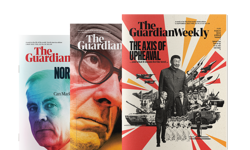
Newspaper supplements remain key vehicles for storytelling and revenue generation, from in-paper ROP supplements to absolute high end coffee table glossies. The Saturday supplement from The Guardian was crowned Weekly Supplement of the Year, described as “the perfect weekend supplement” thanks to its blend of serious journalism and quirky features.
In the non-weekly category, LUXX (The Times) continued its winning streak, applauded for its stunning design and commercial success. Regional titles like KL Magazine and Business IQ also shone, demonstrating that high-quality, niche publications can thrive even without the budgets of national outlets.
These supplements show how print still surprises and delights, offering depth and design sophistication that digital formats struggle to replicate.
Commercial savvy and sustainability
From innovative reporting systems developed by IT managers (a Reach Printing Services entry) to environmentally conscious production practices, newspapers are finding new ways to stay lean and green.
One standout example is the joint venture between dmg media and News UK under Newsprinters Holdings, which expanded in 2024 to deliver improved production efficiency and cut 3.87 million tonnes of CO2 annually. These kinds of operational gains are essential as publishers navigate cost pressures while aiming to meet sustainability goals.
A glimpse into the future
What emerges from this year's awards is a complex, evolving picture. Print is no longer simply a delivery mechanism — it is a statement, a design object, and a commercial asset. The best newspapers are those that understand their unique value propositions and tailor their content, format, and strategy accordingly.
Artificial intelligence, sustainability, audience engagement, and platform diversification are not optional experiments — they are essential elements of survival. But just as vital is the enduring power of design, narrative, and community connection.
As newspapers move forward into 2026 and beyond, the lesson is clear: success lies not in choosing between print and digital but in harmonising the strengths of both.
To view the ‘Winners Book’ and see photographs from the awards night, visit: www.newsawards.co.uk
This article was first published in InPublishing magazine. If you would like to be added to the free mailing list to receive the magazine, please register here.